Oral polio vaccine is stored in refrigerators at a health facility. The rainy season has flooded the area but the refrigerators are intact, keeping the vaccine chilled.
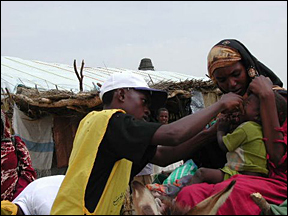
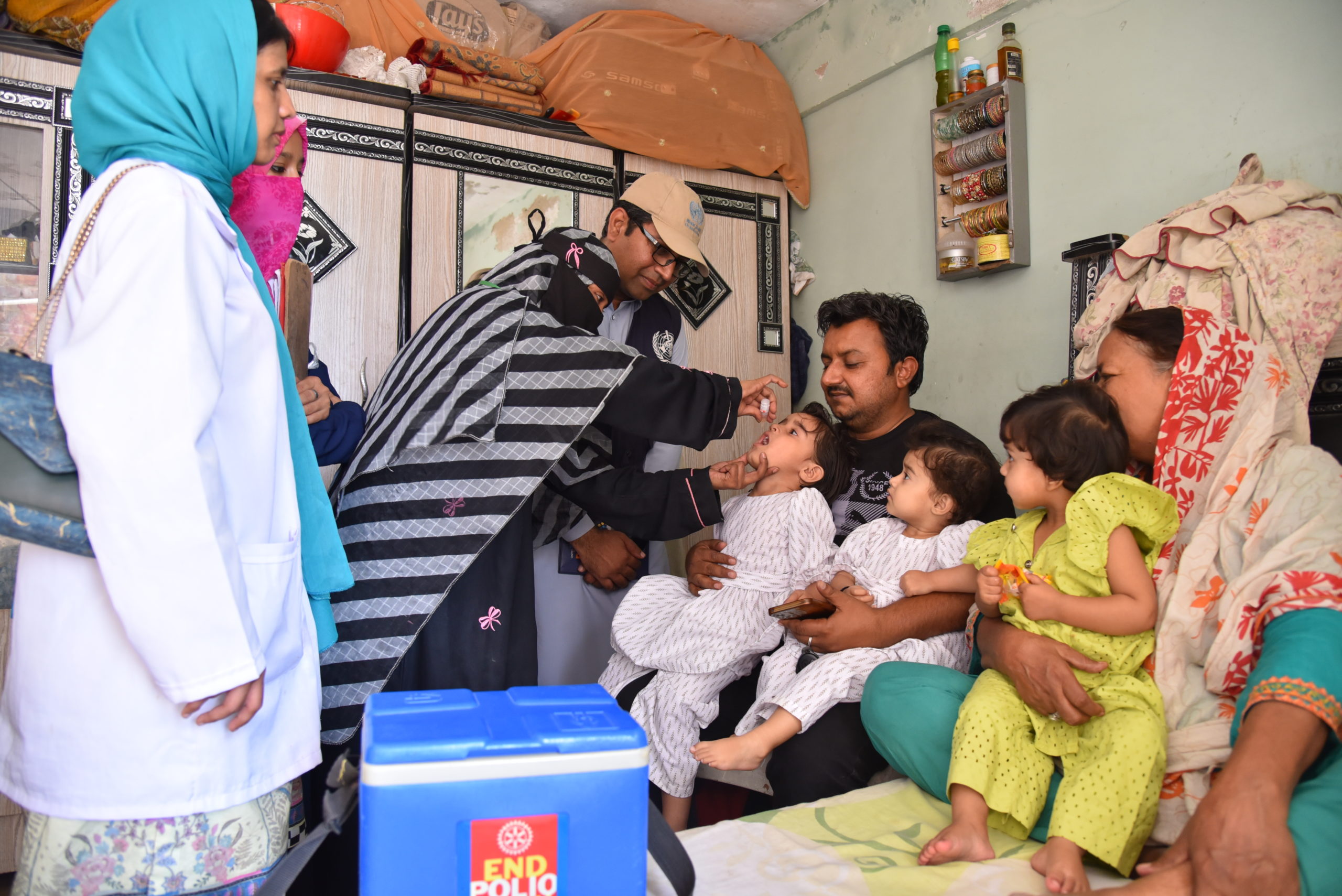
A child is given the vaccine at the Torti camp for internally displaced people. Frequent travel between Chad and Sudan makes it easy for the poliovirus to spread. In the Darfur region, displaced children are particularly vulnerable.
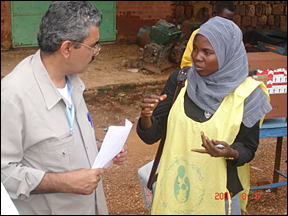
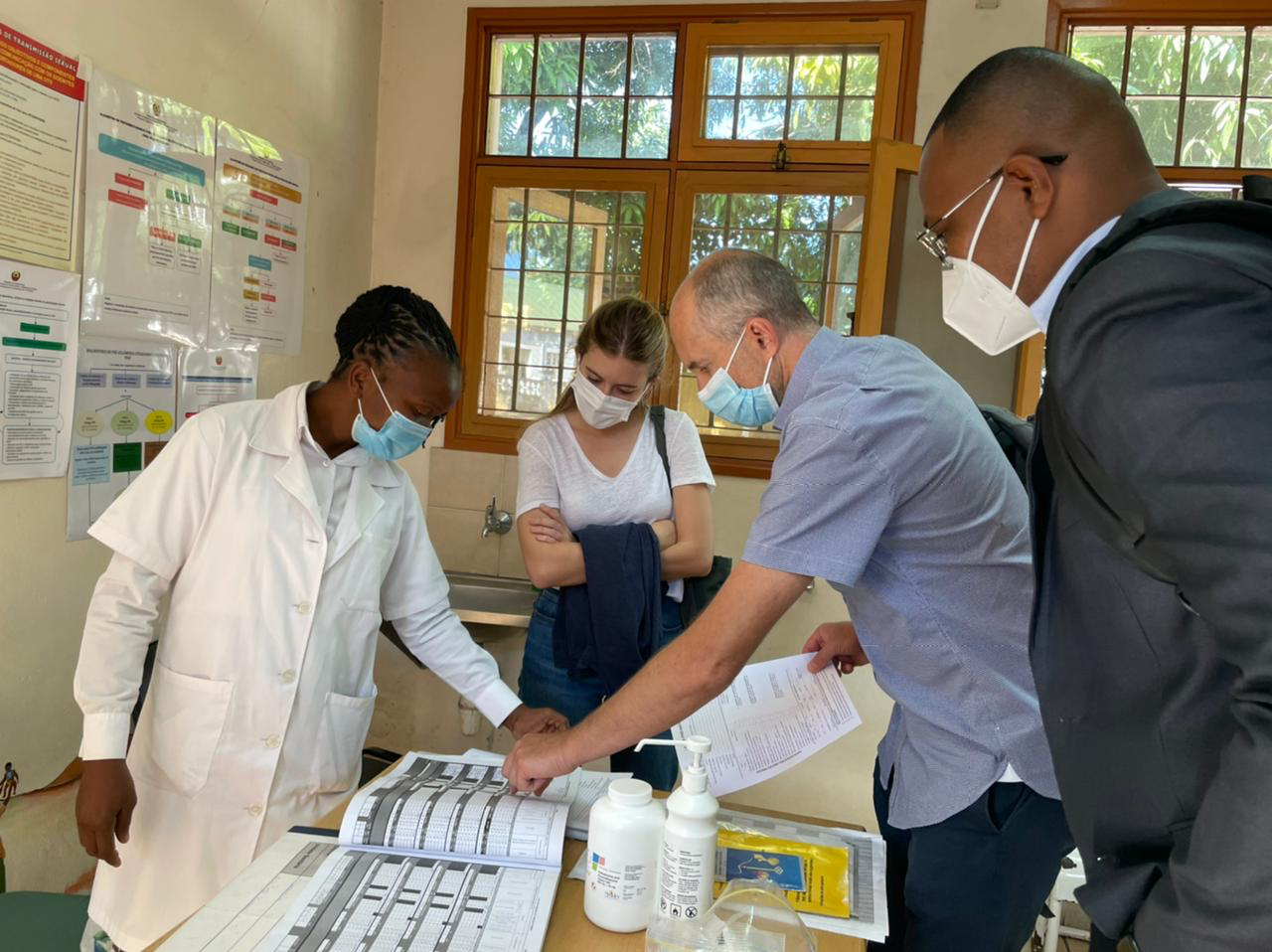
Dr Salah Haithami of WHO checks that a vaccinator knows her tasks – giving two drops of vaccine to every child, marking their fingers with indelible ink, and storing the vaccine safely in her cooler box.
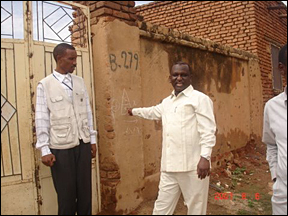
Dr Tayeb EL Saied, in charge of Sudan's immunization programme, demonstrates house marking. These marks tell vaccination teams and monitors whether a house has been visited and whether the children under five years of age have been vaccinated.
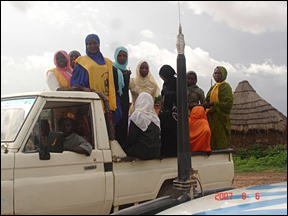
A team of vaccinators waits to be driven out to a remote community. More than 90% of vaccinators are women, as only women have access to private households.