The world is closer than ever to ending polio. As this historic milestone comes within reach, planning and coordination will be needed to bridge the Polio Eradication Strategy with the strategy for Sustaining a Polio-free World to ensure that no form of poliovirus can regain a foothold.
Countries and partners must work together to reduce ongoing risks, safeguard essential functions and put systems in place to protect the gains made through decades of global commitment, investment and partnership.
This planning effort spans several closely linked areas of work. It includes the implementation of the Sustaining a Polio-free World Strategy, which defines the polio-essential functions required to maintain strong surveillance and immunization systems, prepare countries to prevent, detect and respond to any poliovirus event, and manage long-term responsibilities associated with achieving eradication, such as poliovirus containment. Support for certification processes and transition planning will also be critical to help ensure that polio-related knowledge, assets and capacities are preserved and integrated at a country level, where needed. In parallel, planning is underway for worldwide withdrawal of the bivalent oral polio vaccine to protect vulnerable children from the risk of variant polioviruses after the last wild poliovirus is eradicated.
Together, these efforts will help to secure the benefits of a polio-free world for generations to come.
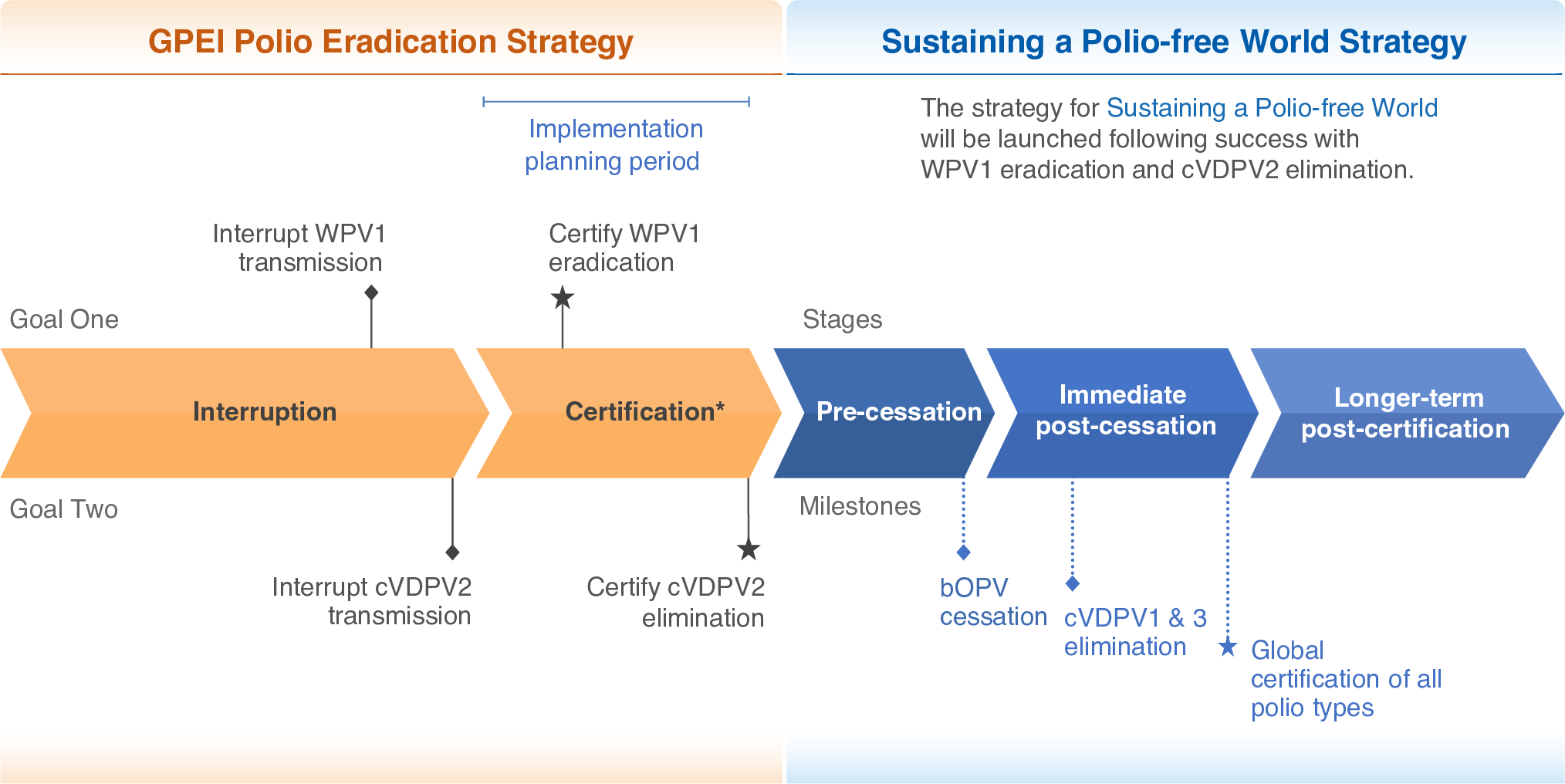
The graphic above shows the relationship between the GPEI Polio Eradication Strategy and the Sustaining a Polio-free World strategy. An implementation planning period for the new strategy will need to take place as the world nears certification of WPV1 eradication and cVDPV2 elimination.