As the world enters the final stretch toward polio eradication, countries are accelerating efforts to reach every last child through a collaborative and combined approach: making polio vaccination not just about a single intervention but part of broader health service delivery like clean water, nutrition, maternal care, protection from other vaccine preventable diseases, and connecting with communities. This is integration. And across polio-affected countries, it is helping reach children who were previously missing polio vaccination while also positively impacting children and families’ overall health and wellbeing. Learn more about GPEI’s integration efforts.
Combining efforts at scale to protect children from multiple diseases in Nigeria
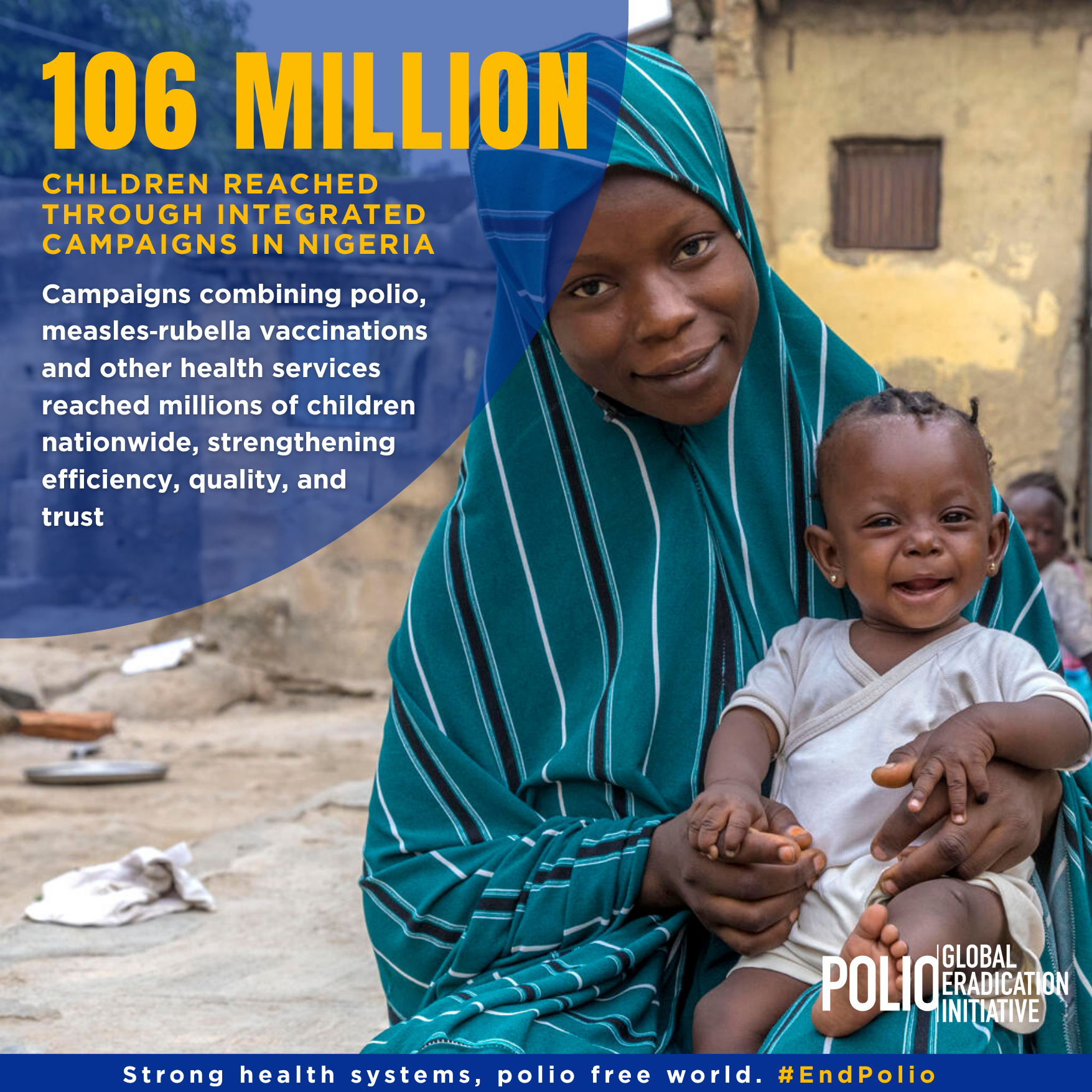 When Nigeria integrates services, it goes big. In October 2025, Nigeria reached over 106 million children with measles, rubella, polio and other essential interventions with one integrated campaign. The largest ever such effort. Quality kept pace with scale, with vaccine refusals staying below one percent nationwide. Less duplication. Stronger supervision. More children reached during one single contact with a family. At this scale, integration isn’t just efficient, its the only approach that works.
Combining multiple vaccines with other health services in an integrated campaign addressed the reasons children are missed, not just the moments. As polio eradication draws closer, this is no longer an innovative approach. It is the only way to ensure eradication is permanent. Read more about Nigeria’s integrated vaccination campaign
After the earthquake, recovery and protection arrived together in Afghanistan
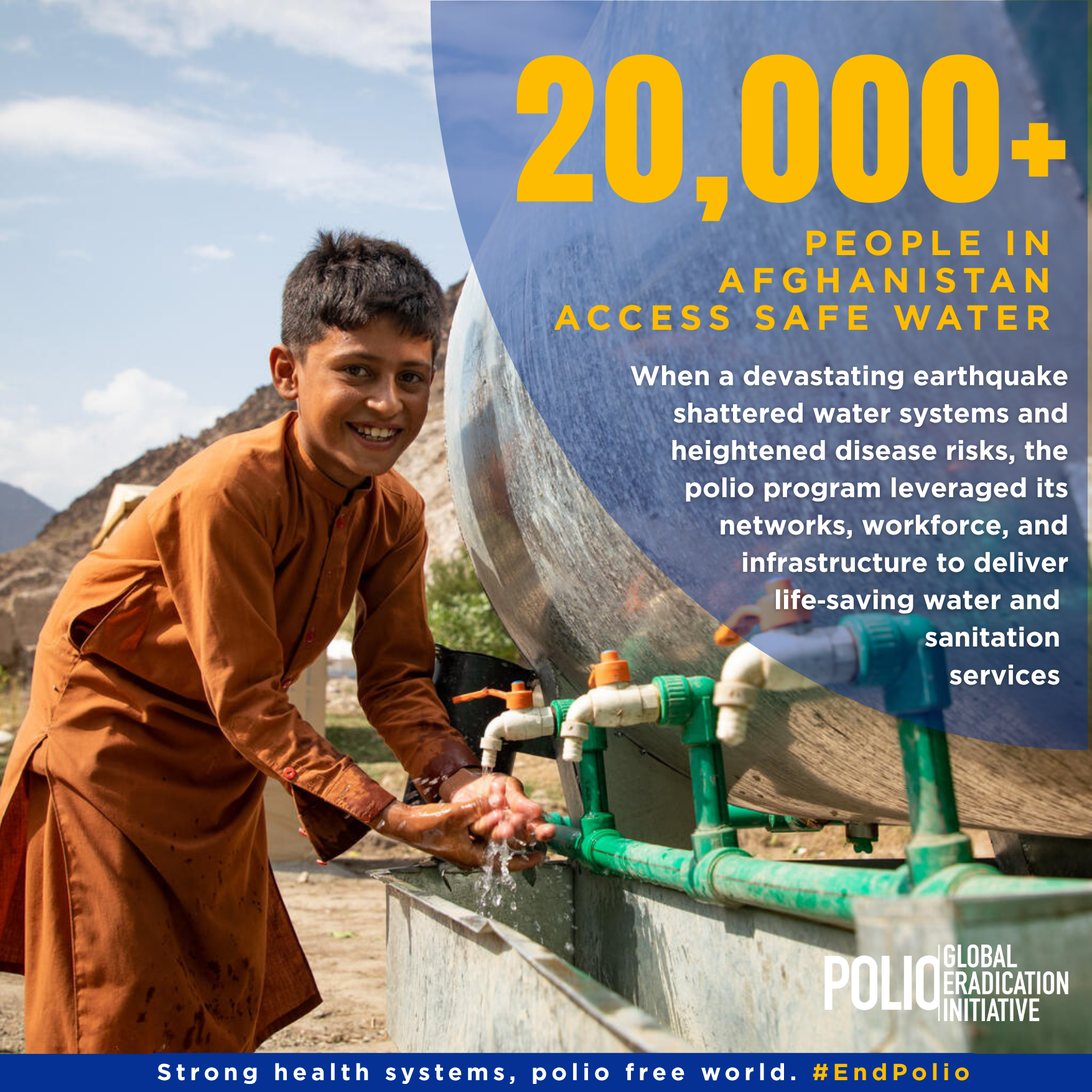
After earthquakes tore through eastern Afghanistan in 2025, families in Nangarhar, Kunar and Laghman lost far more than their homes. Water systems failed. Families were displaced. And with disruption came disease risk.
The Polio Programme worked hard to restore one of life’s most essential services with over 20,000 people receiving water, sanitation and hygiene (WASH) support, helping families move from crisis towards recovery while reducing the risk of deadly waterborne diseases. Social mobilizers promoted health education, hygiene, and sanitation, helping prevent disease outbreaks, including polio, as communities recovered.
When recovery and protection move together, communities feel the difference. Read the full story from Afghanistan.
Pakistan: When services move together, no family gets left behind
In parts of Pakistan, distance and insecurity have long decided which children are reached with vaccines and which ones are not. Integration is changing that equation.
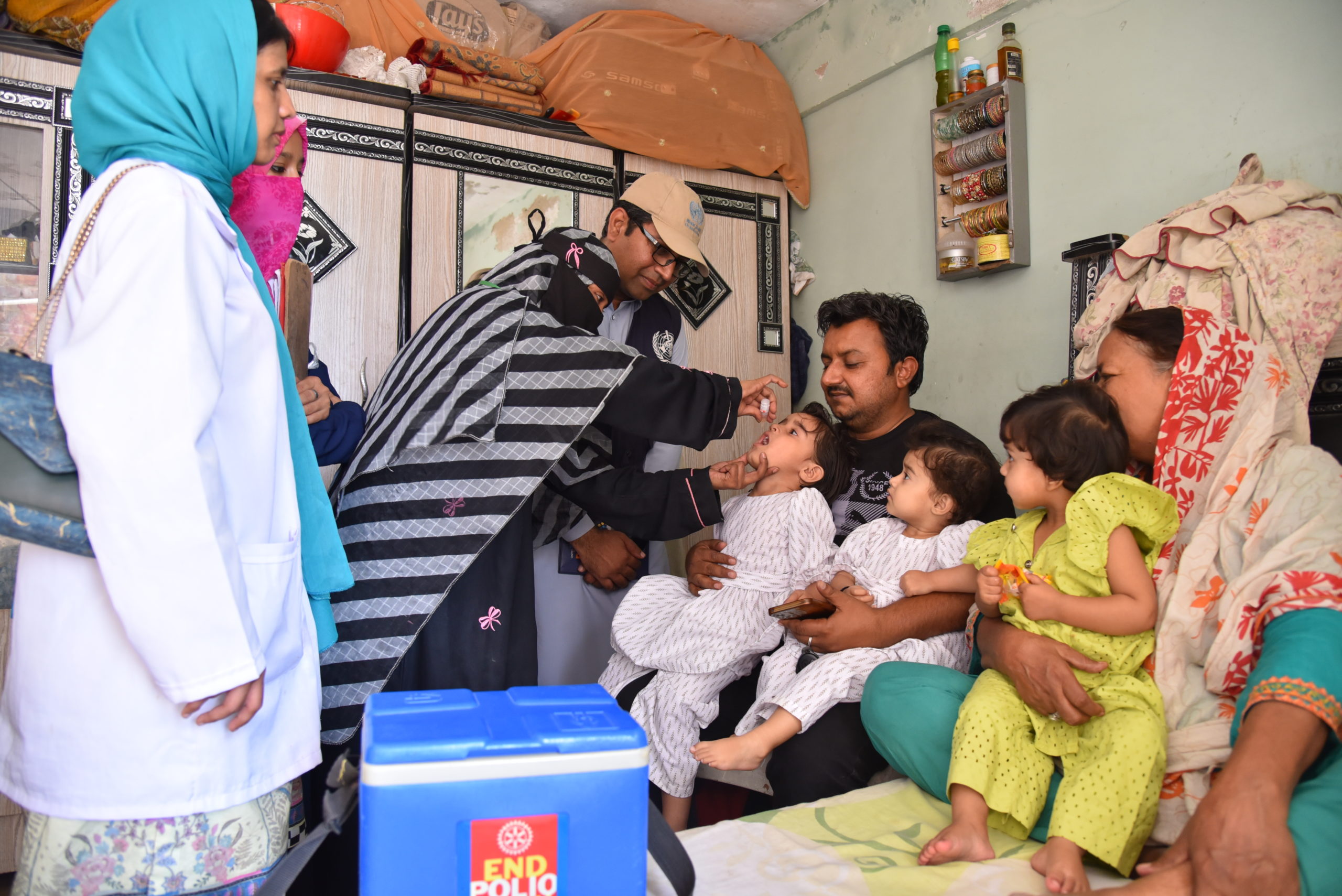
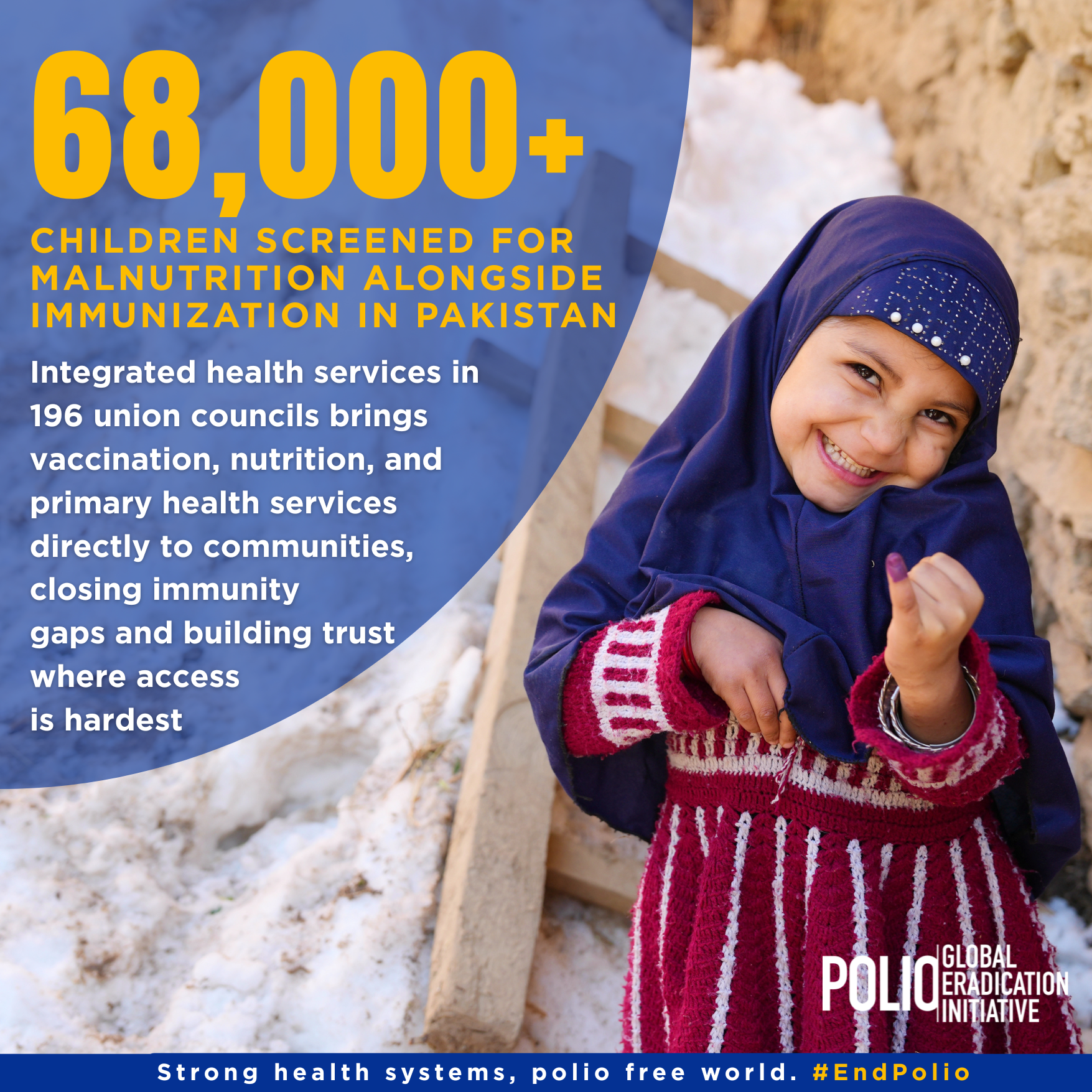
By combining vaccination with nutrition support, maternal and child health services and basic sanitation, outreach teams expanded their reach from 132 to 196 union councils across the high-risk regions of southern Khyber Pakhtunkhwa. During vaccination campaigns, over 68,000 children were screened for malnutrition while they received their polio drops. Fewer repeat visits. Stronger trust. Gaps of routine services finally closing through this collaborative integrated effort. Read more about integrated service delivery in Pakistan.
 In Somalia, trust was the ‘vaccine’ that had to come first
Somalia has one of the world’s highest numbers of ‘zero-dose’ children, a category of children who have not received any type of vaccine in their lifetime. Many of them were missed not due to absence of services. It was because families were not ready to open their doors.
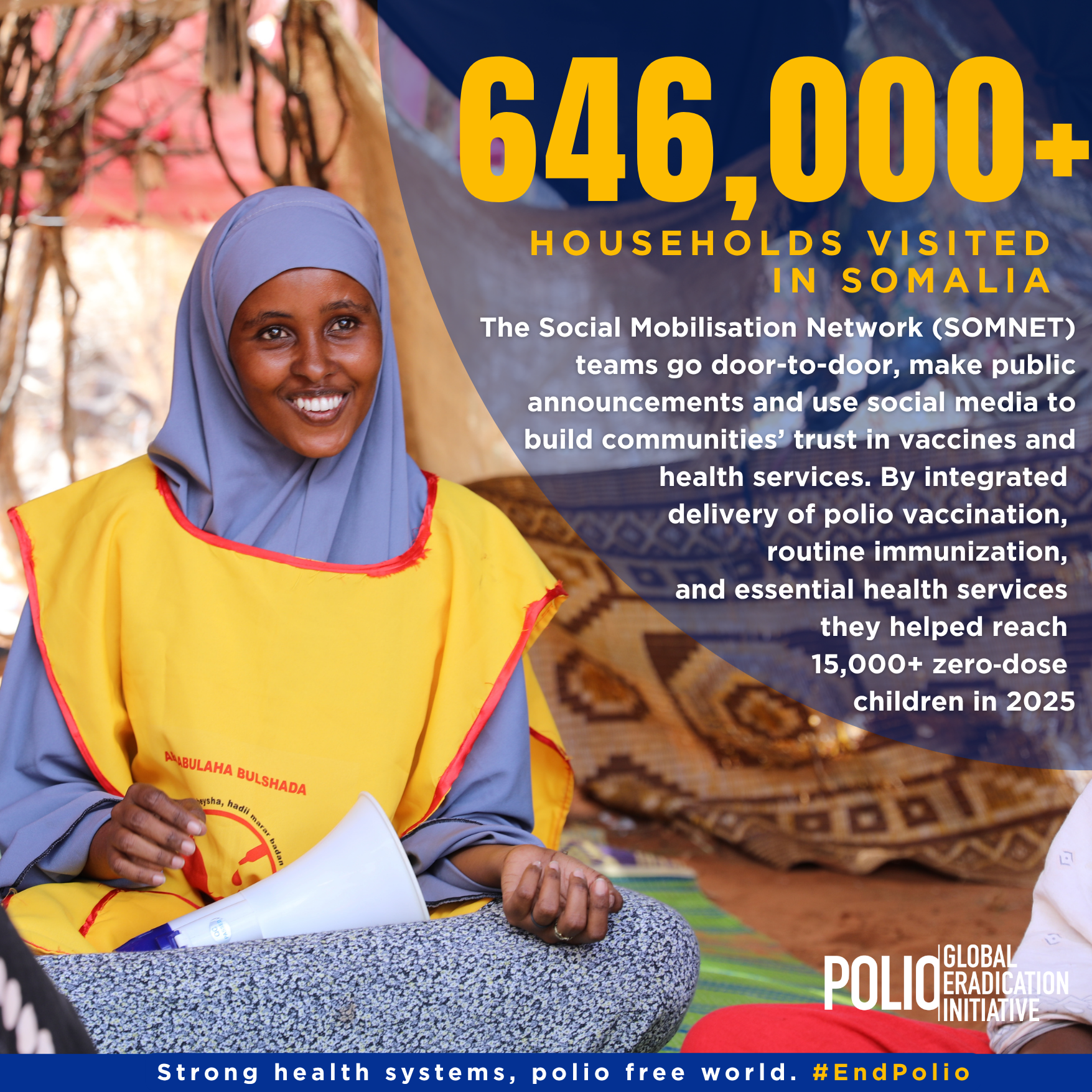
By combining polio vaccination, routine immunization, basic health services and structured community engagement, the Social Mobilization Network (SOMNET) teams went door-to-door to over 645,000 households, speaking with local influencers and caregivers, making public announcements and using social media to build communities’ trust in vaccines and health services. More than 15,500 zero-dose children were identified and referred for vaccination. Read more about Somalia’s community health workforce.