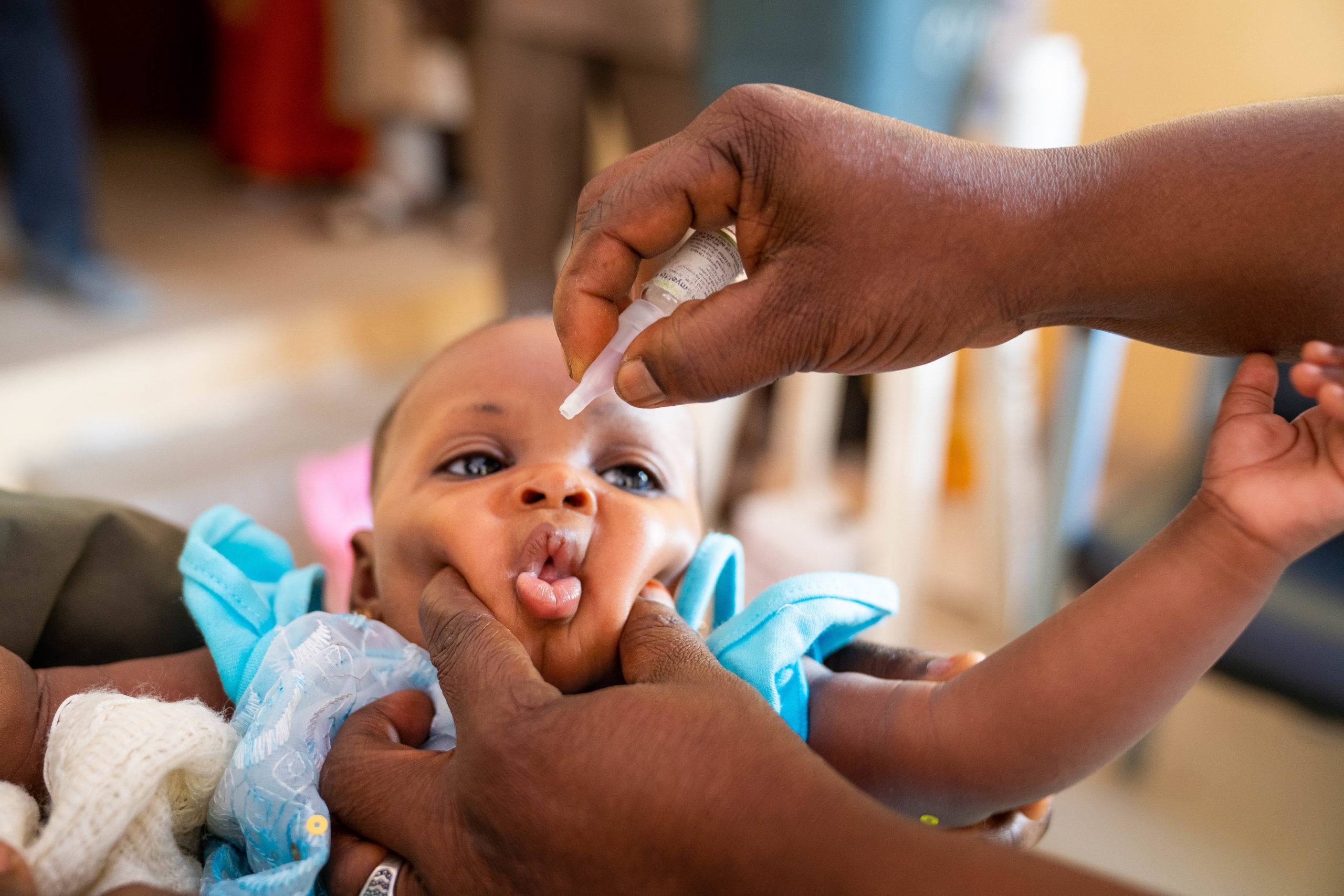
As the world moves closer to polio eradication, stopping outbreaks quickly and decisively has never been more important. To reflect evolving epidemiology, new scientific evidence and years of operational experience, the Global Polio Eradication Initiative has updated its outbreak response Standard Operating Procedures (SOPs).
The updated SOPs sharpen how countries detect, assess and respond to poliovirus outbreaks — with a particular focus on the type 2 outbreaks that now account for most global transmission. They introduce clearer outbreak definitions, stronger risk assessment, and more tailored response strategies, helping programmes close immunity gaps faster and prevent outbreaks from becoming prolonged.
At the heart of the updated guidance is a simple goal: protect children more rapidly and interrupt transmission more reliably, even in the most challenging settings. The SOPs also strengthen implementation tracking, making it easier to identify and address operational gaps before outbreaks become entrenched.
While these updated standards provide clearer direction and better tools, their impact ultimately depends on strong national ownership and high-quality implementation. Used well, they will help countries respond smarter, faster and more effectively — bringing the world closer to a lasting polio-free future.
Dr Karim Djibaoui and Dr Tsedeye Girma, leads for polio outbreak response at WHO and UNICEF explain why updated polio outbreak SOPs matter.
PolioNews: The GPEI developed updated outbreak response Standard Operating Procedures (SOPs). Why was this update needed now?
Dr Karim Djibaoui:
The global polio landscape has evolved significantly over the past decade. We’ve accumulated extensive operational experience, new scientific evidence and a clearer understanding of how outbreaks emerge and persist. The updated SOPs reflect those lessons. They are designed to help countries stop poliovirus transmission faster, more decisively and more sustainably — especially in increasingly complex settings.
PolioNews: What makes these updated SOPs different from previous versions?
Tsedeye Girma:
The biggest shift is precision. The new SOPs introduce clearer, time-bound outbreak definitions and distinguish between new outbreaks and persistent ones. That allows us to escalate strategies more rapidly when transmission is not interrupted. Outbreak response is now explicitly risk-based and context-specific — not one-size-fits-all.
PolioNews: Can you explain what “risk-based” means in practice?
Djibaoui:
It means vaccination strategies are adapted to local realities. We now systematically assess population immunity profiles, surveillance performance, operational feasibility and historical response quality before determining the most appropriate response approach. Particularly for circulating variant poliovirus type 2 (cVDPV2), we analyse how long it has been since the last type 2 vaccination campaign, routine coverage gaps, and whether previous outbreak responses achieved high quality.
PolioNews: cVDPV2 continues to drive most outbreaks globally. How do the updated SOPs address this?
Girma:
That’s correct — the majority of outbreaks today are cVDPV2. One challenge is declining type 2 mucosal immunity in areas where type 2–containing vaccines have not been used for some time. The updated SOPs strengthen the risk assessment framework for cVDPV2 and clarify how to optimize vaccine strategies — including timely use of novel oral polio vaccine type 2 (nOPV2), strategic deployment of IPV where indicated, and expanded use of nOPV2 in high-risk settings.
PolioNews: What will countries experience differently under these new guidelines?
Djibaoui:
Countries will have clearer timelines and decision points. If a response is not performing as expected, there are defined triggers for course correction. We’ve also strengthened the implementation tracking framework so that programmes can better identify why outbreaks persist — whether due to epidemiological drivers or operational quality gaps — and address those issues before outbreaks become chronic.
PolioNews: Are SOPs alone enough to stop outbreaks?
Girma:
No — and that is very important to emphasize. SOPs provide the framework, but implementation quality remains the single most important determinant of success. The updated standards will only translate into faster interruption of transmission if they are owned by national authorities, supported by strong political commitment and executed with operational excellence.
PolioNews: What is the broader significance of these updated SOPs for the eradication effort?
Djibaoui:
They sharpen outbreak response where it matters most today. By closing immunity gaps faster, improving response quality and preventing outbreaks from becoming entrenched, we reduce overall transmission and protect more children from paralysis. Until eradication is achieved everywhere, rapid and high-quality outbreak response remains absolutely critical.
Watch the Webinar Launch of the SOPs