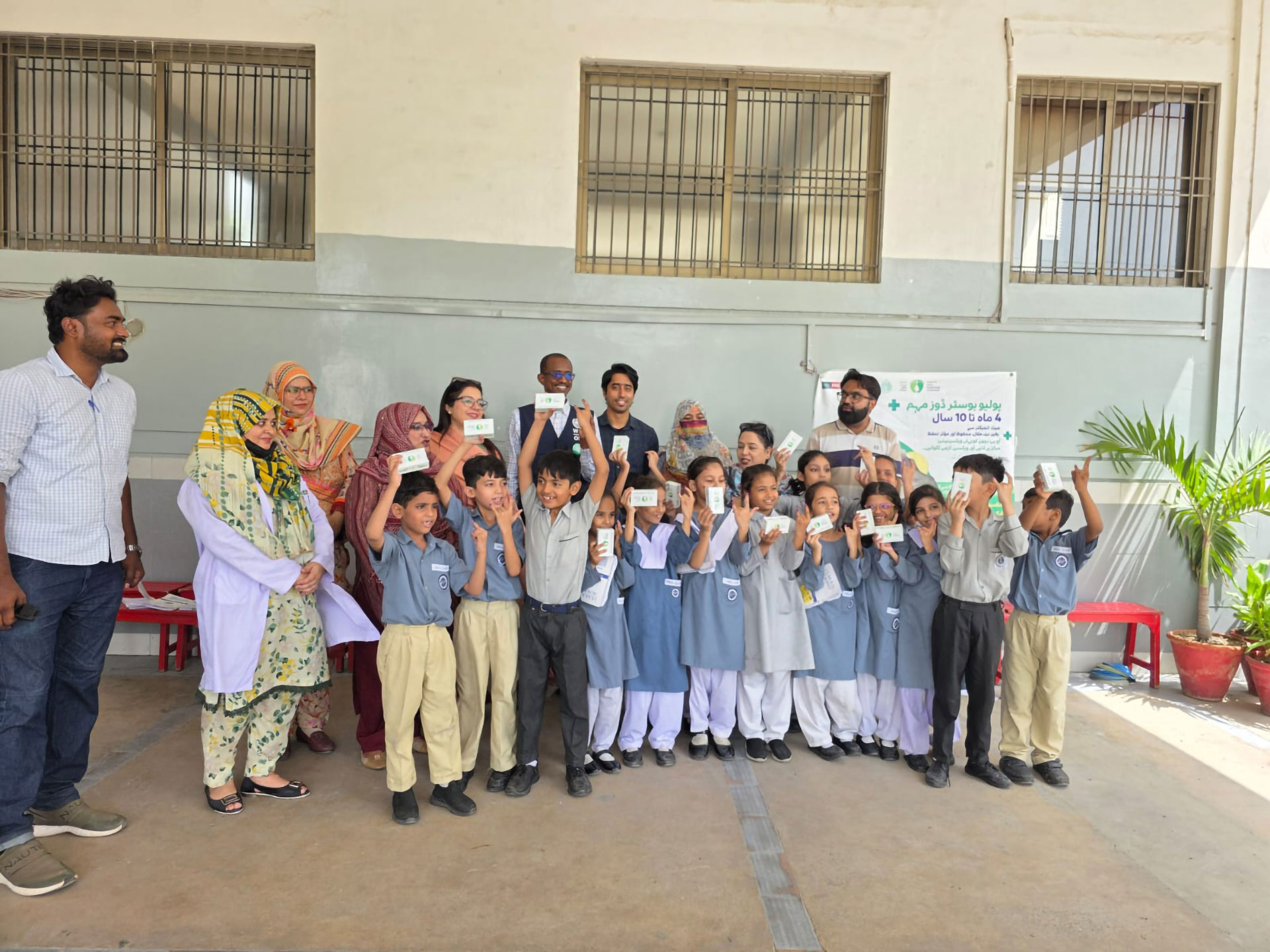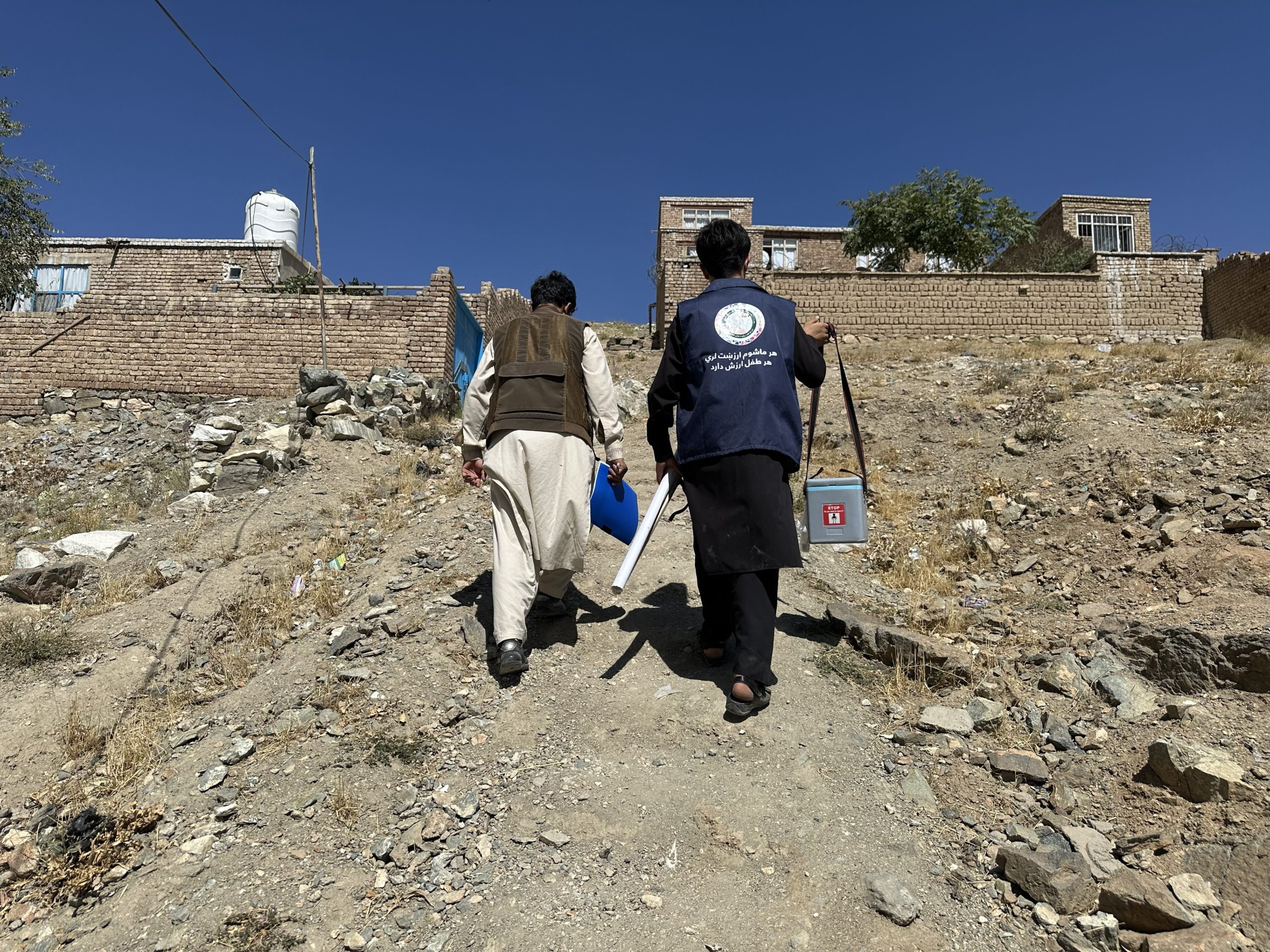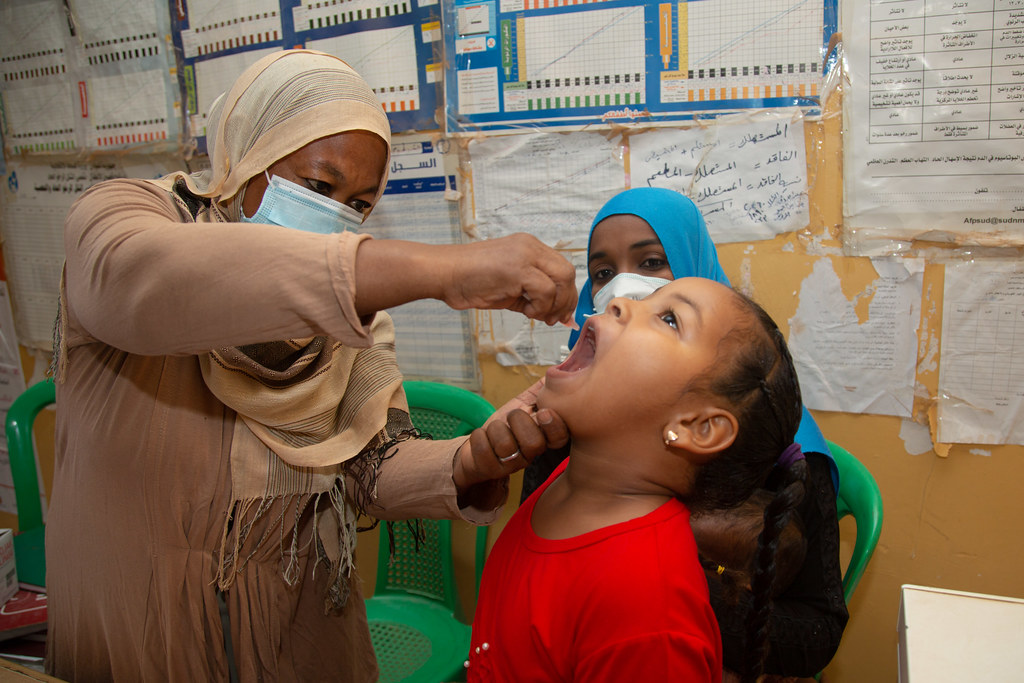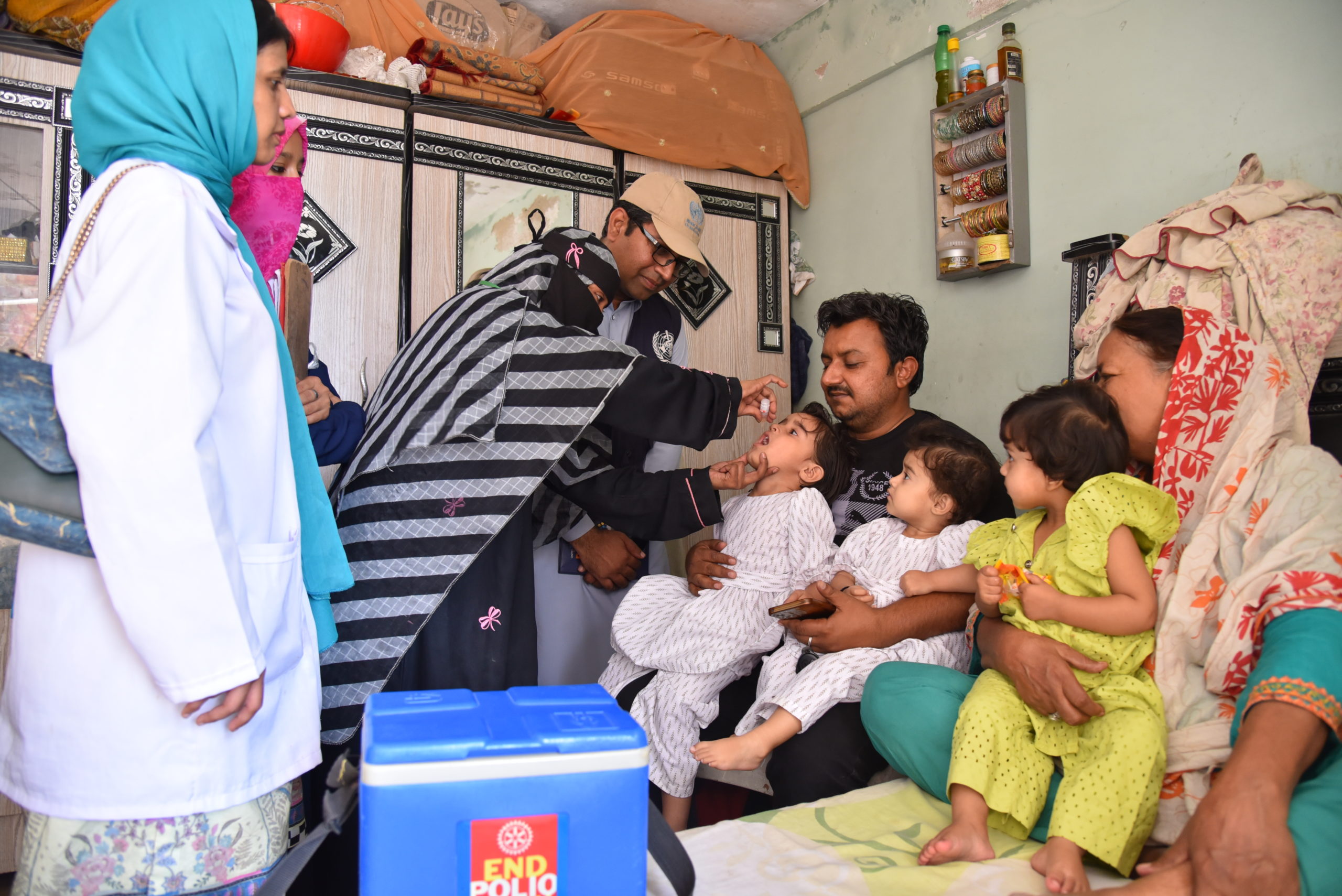
23 September 2026, Islamabad, Pakistan – “When we are working, we don’t see whether it is winter, summer, autumn or spring. In every season and in all weather conditions, we do our best to reach every child. This is why we go house to house to give polio drops,” says Fareeda.
Fareeda is one of the more than 400 000 frontline polio workers trained and mobilized by the World Health Organization (WHO) multiple times a year in support of Pakistan’s Polio Eradication Initiative (PEI) to protect millions of children against paralytic polio. Under the leadership of the Government of Pakistan, and with support from partners such as Rotary International, polio workers like Fareeda are running the last mile to eradicate polio in Pakistan, the Eastern Mediterranean region and worldwide.
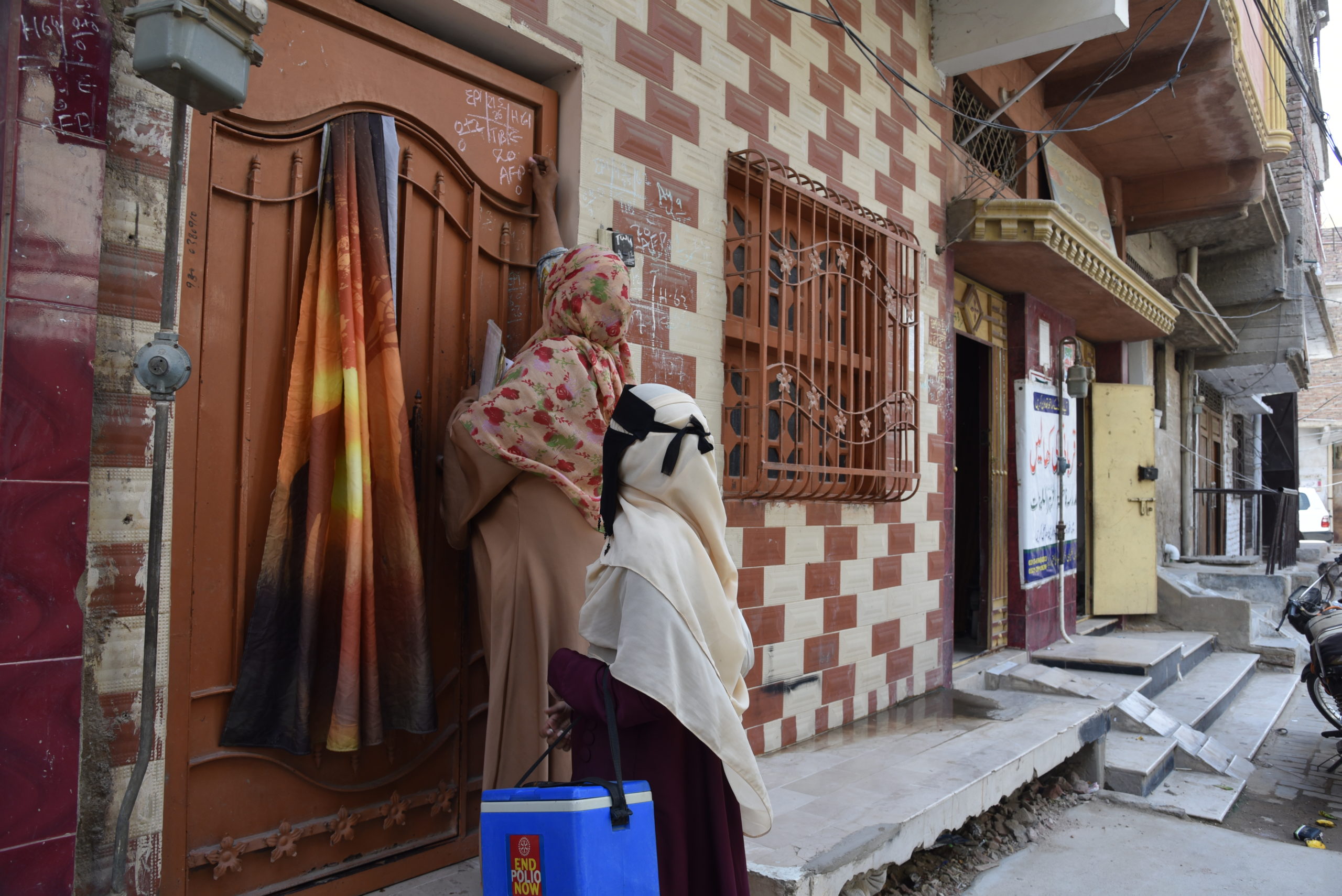
In May, Fareeda was one of the frontline workers who supported a subnational campaign to protect over 18.6 million children as part of the third large-scale door-to-door campaign of 2026. On a hot summer day, she climbs all the way to the top floor of a 5-storey building in the Gulshan-e-Elahi neighbourhood of Hyderabad district, stopping to catch her breath on the landing. Using her phone as a torch, and with a vaccine carrier hanging from her shoulder, she carefully navigates the staircase in complete darkness during an electricity outage. The unexpected obstacle does not prevent her from reaching 2 families on the top floor and vaccinating their 4 children.
Frontline workers like Fareeda walked tirelessly in the intense summer heat through busy streets, dense neighbourhoods, semi-urban areas, villages and towns across 75 districts. Their only goal: bringing the power of medical science to every family – in this case, in the form of a safe and effective polio vaccine prequalified by WHO and safely used across 195 countries, including all Muslim-majority countries.
Since the launch of Pakistan’s Polio Eradication Initiative in 1994, Pakistan has reduced polio cases by 99.8%, from an estimated 20 000 in the early 1990s to 31 in 2025 and 4 cases so far in 2026. Global polio eradication experts agree that ending wild polio in Pakistan and worldwide is within reach, but only if all partners maintain the response in the 2 remaining endemic countries: Afghanistan and Pakistan.
“I have vaccinated my own children because I would never want them to be affected by polio. Just like that, I do not want any child in Pakistan, or anywhere in the world, to be paralysed by polio. When I am vaccinating children, I am thinking of them as my own,” says Fareeda, who has been working as a polio worker for over 10 years.
For Mubashira, commitment to polio eradication runs in the family.
“I was very inspired to do this work because my father and sister used to do it too. Polio is an incurable disease, and it puts our children’s future at risk. I want to protect their future and protect them from paralysis,” she says.
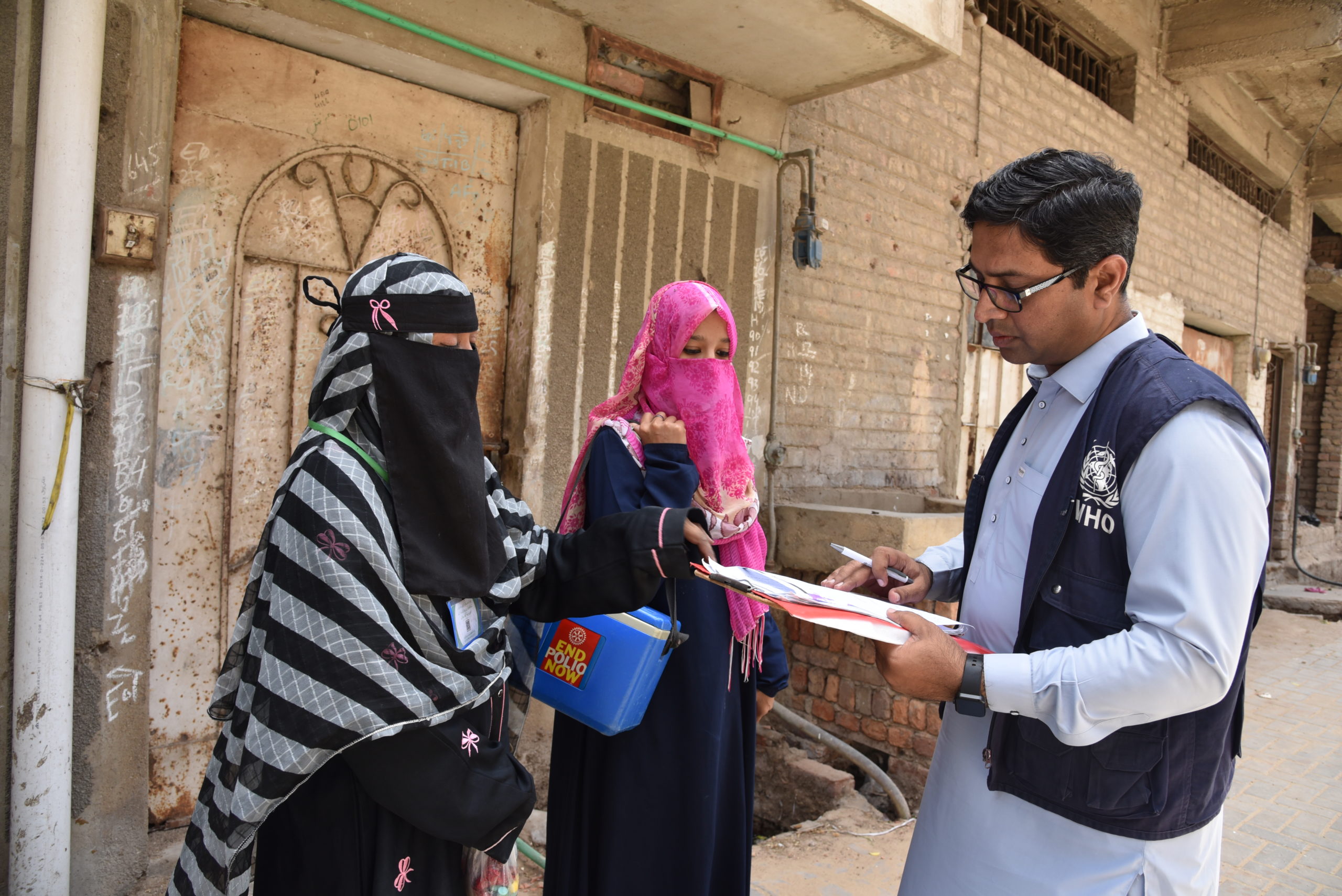
Mubashira’s 2-member team, deployed in the Ahsanabad neighbourhood, visits 450–500 homes during each campaign to vaccinate every child under 5.
As a founding partner of the Global Polio Eradication Initiative (GPEI), WHO provides technical and operational assistance to Pakistan and partners to run the largest polio operation in the world. This collaboration includes science- and evidence-based vaccination campaigns, support for the world’s largest and most sensitive poliovirus surveillance network, training and deployment of polio workers – 60% of them women – outbreak response, and the monitoring and evaluation of vaccination drives.
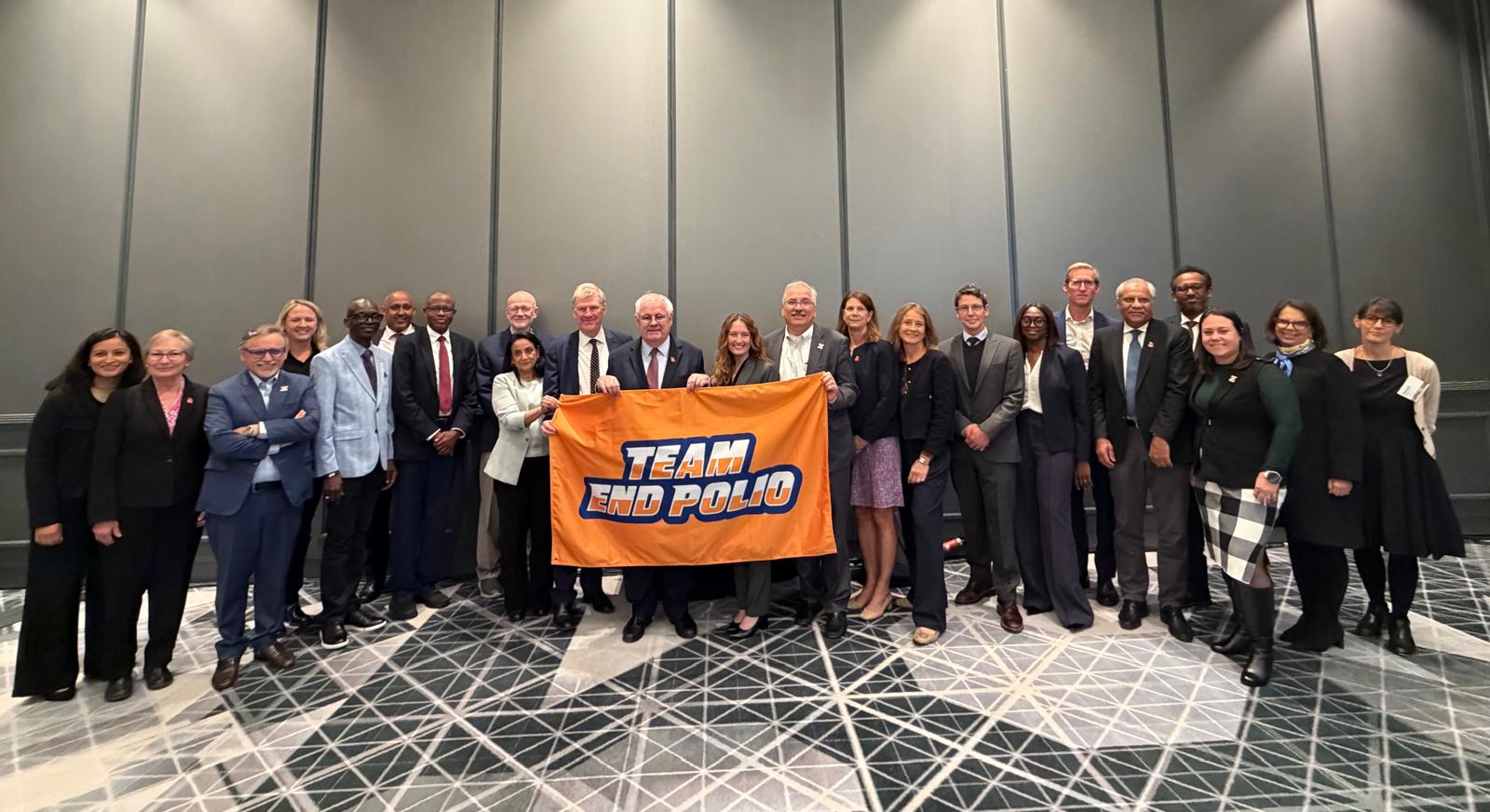
Generous funding provided by donors like Rotary International – a founding member of the GPEI and a pioneer of global polio eradication efforts – has been instrumental in ensuring the continuity of essential WHO polio operations in Pakistan. To date, Rotary has contributed US$3 billion to global polio eradication efforts and US$258 million to WHO polio operations in Pakistan since 2000, along with high-level advocacy, countless volunteer hours and community health projects in priority communities.
“When I leave home for work, I leave determined to vaccinate every child assigned to me for the day and to make sure that no child is left behind,” says Nausheen, who has been working as a polio worker for 9 years. She uses every opportunity to explain to parents that polio is a life-threatening disease, but that it can be prevented with the oral polio vaccine and a complete routine immunization course.
“I do this work because I see it as a responsibility and a good deed. These children are our future; we have to protect them from paralytic polio,” she says.
Polio workers like Fareeda, Mubashira and Nausheen are the backbone of polio eradication efforts in Pakistan, knocking on every door and visiting every family to leave no child behind and secure a polio-free Pakistan and a polio-free world.
In 2026, WHO polio operations are being supported by the generous contributions of Pakistan, Canada, Germany, the Kingdom of Saudi Arabia, the United Arab Emirates, the Gates Foundation and Rotary International.
Originally posted on the WHO/EMRO website.