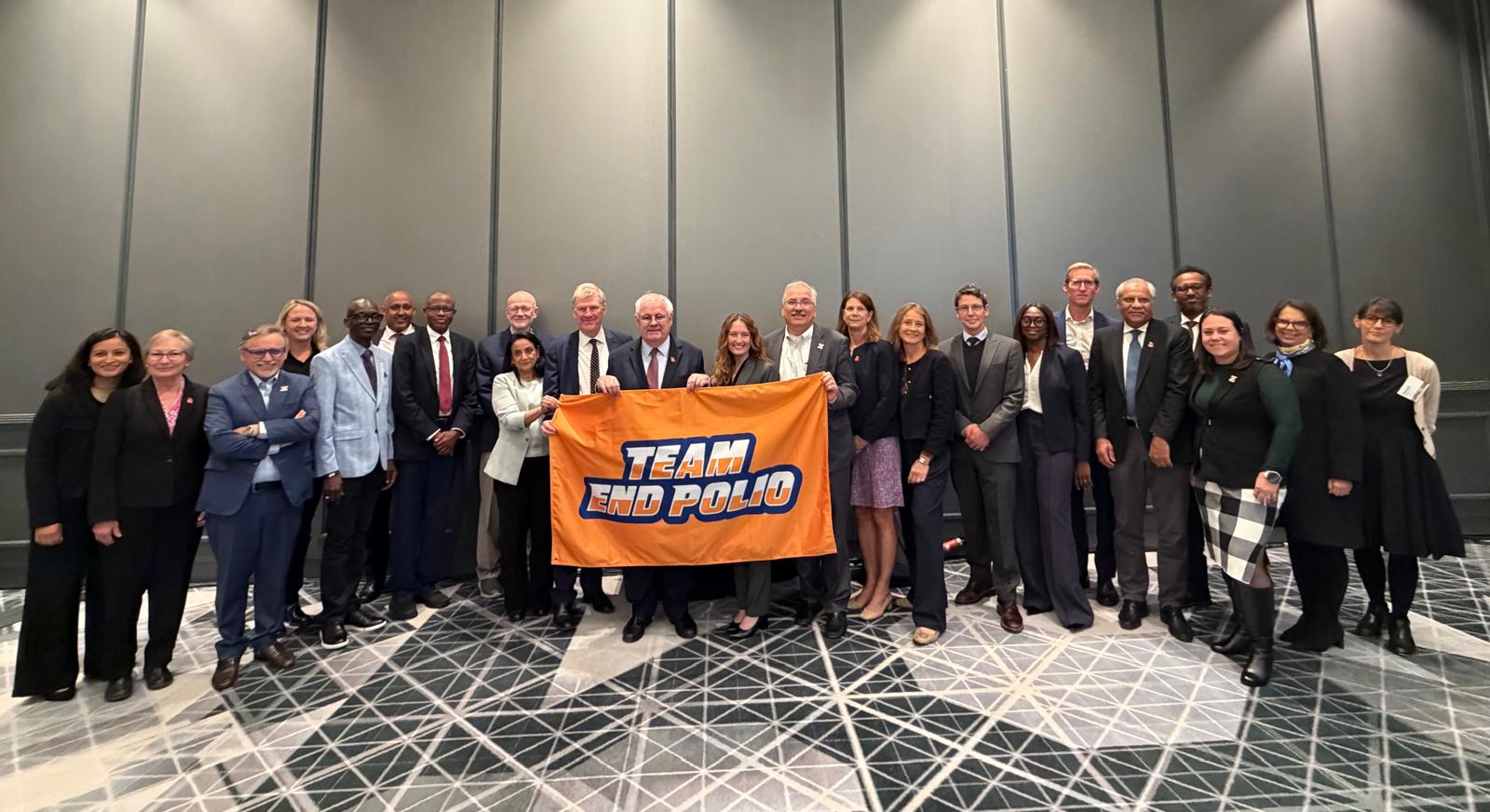
On 10 October, the Global Polio Eradication Initiative’s (GPEI) Polio Oversight Board (POB), donor and country governments, and partner leadership met in Berlin to align on the 2027 budget and review the state and strategy of the program.
The meeting also served as an official welcome for Chris Wolff, who recently joined the World Health Organization as Director of Polio Eradication and Chair of the GPEI Strategy Committee.
At the meeting, the POB approved a 2027 operating budget of approximately US$778 million, roughly US$65 million below 2026. This comes a year after the GPEI reduced its 2026 operational budget by 30% due to historic cuts in official development assistance from several longstanding GPEI donors.
The 2027 budget builds on difficult trade-offs made in 2026, which have impacted the speed and scale of eradication efforts in some places. The cuts have required the program to sequence some outbreak responses later than originally planned and left some preventative campaigns unfunded. Simultaneously, the program is working to address increasing transmission in some key geographies, including Afghanistan and the Democratic Republic of Congo.
The approved budget protects the activities most critical to stopping polio, focusing on interrupting transmission in Pakistan and Afghanistan and maintaining outbreak response in the geographies most critical to achieving eradication. The sustained funding cuts require continued tradeoffs. Some outbreak responses will be limited in scope, delayed, or contingent on additional resources, increasing the risk of preventable polio cases. Surveillance funding will stay at its reduced 2026 level.
Despite the financial constraints and persistent challenges in some geographies, the GPEI has the tools and knowledge to eradicate polio. Pakistan has seen a 75% reduction in wild poliovirus detection this year, and five African countries ended variant poliovirus outbreaks. At this point, the virus persists in places where access, security and health systems are weakest.
Efforts are now focused on building stronger local partnerships to improve access and joining forces with others to provide additional health services alongside polio vaccines. The GPEI also recognizes that overcoming the final hurdles to eradication requires incorporating polio operations as part of national health programs and sustaining critical functions needed to keep countries polio-free.
Coming out of the POB meeting and in light of the 2027 budget decision, the program will revise its strategy, including review of opportunities for further partnership with other health services, and adapting country and subnational plans.
Eradication remains achievable, but it will require full funding and sustained political commitment, including to address complex challenges impeding access to children. Polio eradication is a global public good and a shared responsibility, and we thank our donors, partners, and country governments for their responsiveness to the evolving financial and political environment and for their continued support in reaching this ambitious, historic goal.