London, United Kingdom, 10 March 2026 – Global health leaders, parliamentarians and civil society advocates gathered at the UK House of Commons this week to reaffirm their shared commitment to finishing the job of polio eradication.
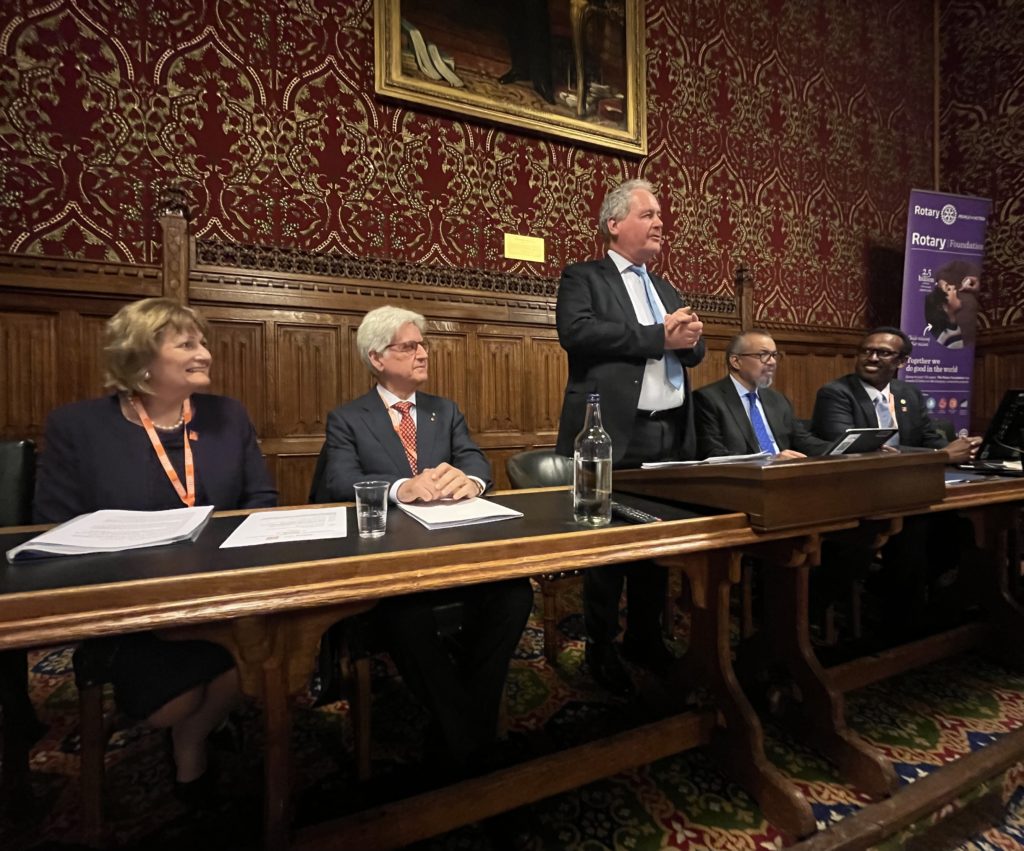
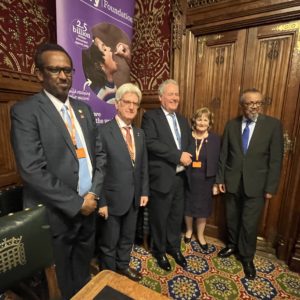
Hosted by Member of Parliament Bob Blackman at the Palace of Westminster and organized in partnership with Rotary International, the event brought together representatives from government, the World Health Organization, Rotary International and the broader global health community to discuss how to sustain momentum toward a polio-free world.
Opening the event, WHO Director-General Dr Tedros Adhanom Ghebreyesus expressed deep appreciation for the United Kingdom’s long-standing leadership in the global fight against polio.
“Since the Global Polio Eradication Initiative was launched in 1988, cases of polio have fallen by more than 99%. Millions of children are walking today who would otherwise have been paralysed,” said Dr Tedros. “This extraordinary progress has been made possible by governments, international organizations, civil society, foundations and volunteers working together across decades and across borders.”
Dr Tedros highlighted the United Kingdom’s pivotal role in this achievement, noting that the country has combined financial support embedded in its core contribution to WHO, diplomatic leadership and sustained advocacy to advance the eradication effort.
“For decades, the UK has been one of the strongest supporters of polio eradication. Its leadership has helped drive global progress and remains essential as we push toward the finish line.”
Drops of life
Speakers throughout the evening emphasized the powerful role played by Rotary, whose volunteers, advocates and donors have helped keep polio eradication high on the global agenda for more than four decades.
Francesco Arezzo, President of Rotary International, reflected on meeting a little girl in Pakistan recently, who could not walk as her legs had been paralysed by the virus, as she carried herself forward in quiet determination on her hands. “If only we could have worked a little faster,” Arezzo reflected, “this girl would not be paralysed.” Clearly moved by the memory of meeting her, he urged everyone in the room to further strengthen their efforts. “We owe it to that little girl,” he told the audience. “And to millions just like her.”
Participants also heard from Dr Jamal Ahmed, WHO Director for Polio Eradication, Rotary International President Francesco Arezzo, and Anne Wafula Strike, Paralympian and Rotary Polio Ambassador.
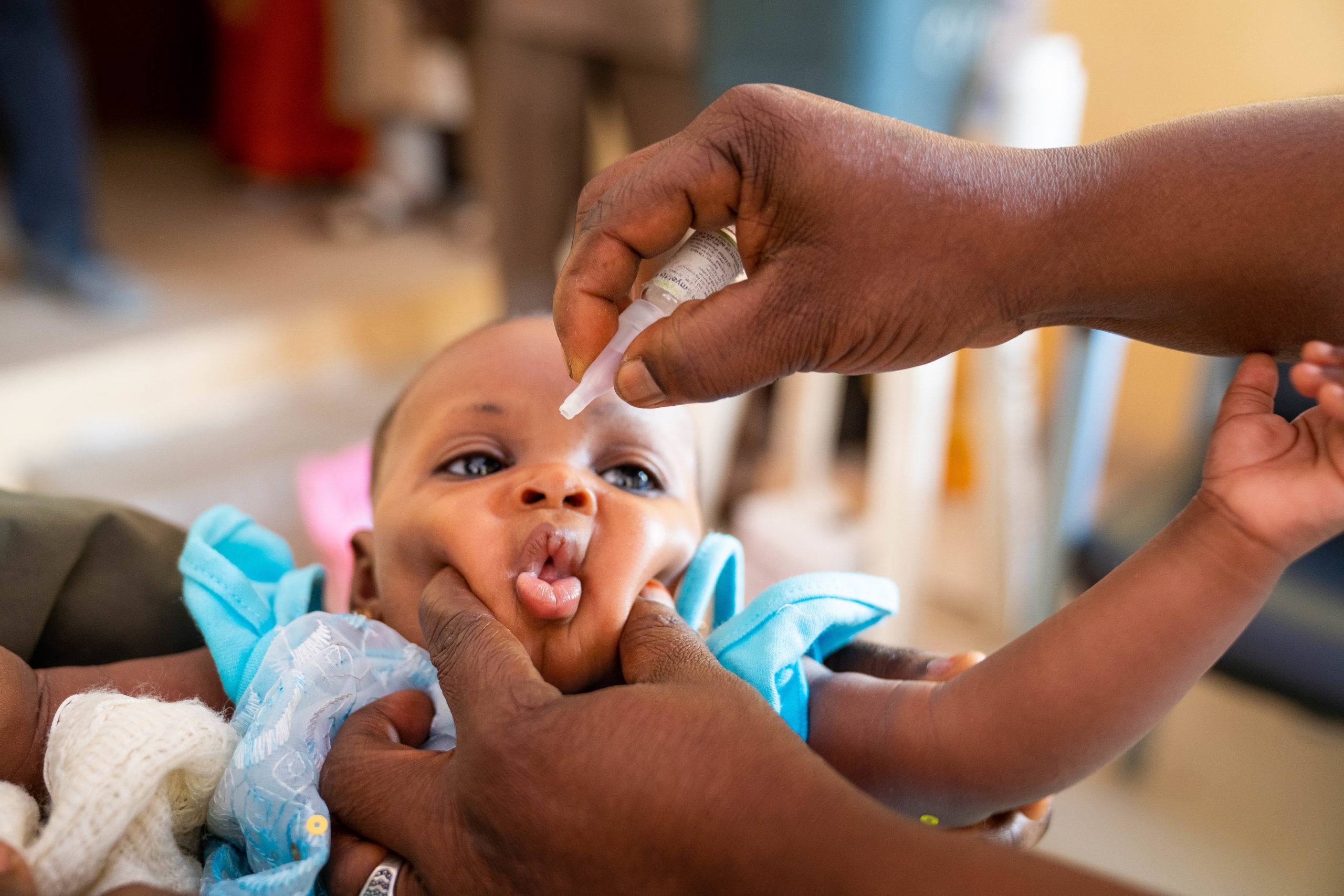
Strike’s personal story as a polio survivor underscored the devastating human impact of the disease and the importance of ensuring that no child suffers from polio again. “The virus does not see race or religion,” she said. “It attacks the innocent child who missed drops of life.” Drawing on her experience as a Paralympian, she compared the eradication campaign to the closing stages of a long-distance race. When the finish line comes into view, exhaustion can set in. But that is precisely the moment when athletes must summon their final strength. “We are almost there,” she said. “So let’s buckle up.”
Opportunity for success… if we all buckle up!
Today, wild poliovirus transmission remains endemic in only two countries — Pakistan and Afghanistan — bringing the world closer than ever to eradication. At the same time, speakers stressed that outbreaks of variant poliovirus serve as a reminder that until the disease is eradicated everywhere, children everywhere remain at risk.
“History shows that if we ease up now, polio will come roaring back — at a far greater human and financial cost than finishing the job,” Dr Tedros said.
The event also highlighted the broader importance of global cooperation at a time of increasing geopolitical fragmentation. Polio eradication, speakers noted, remains one of the clearest examples of what sustained multilateral partnership can achieve — bringing together governments, international organizations, civil society and communities around a shared mission to protect every child from paralysis.
With the tools, knowledge and partnerships in place, participants stressed that the world is closer than ever to consigning a second human disease to history.
“The world has eradicated one human disease before,” said Dr Tedros. “Together, let us make polio the second.”
“As we leave here today, let us carry with us a renewed sense of purpose. Polio eradication is within reach, but only if we continue to champion it – through political will, through financial commitment, and through unwavering support for the communities and health workers on the frontlines,” concluded Judith Diment, Vice Chair International PolioPlus Committee, Rotary International, who was instrumental in bringing this event together.”