21 October 2026, Kabul, Afghanistan – In the early morning of a polio vaccination campaign, before the streets become busy, Rashed Anawri is already thinking about the children he will meet during the day.
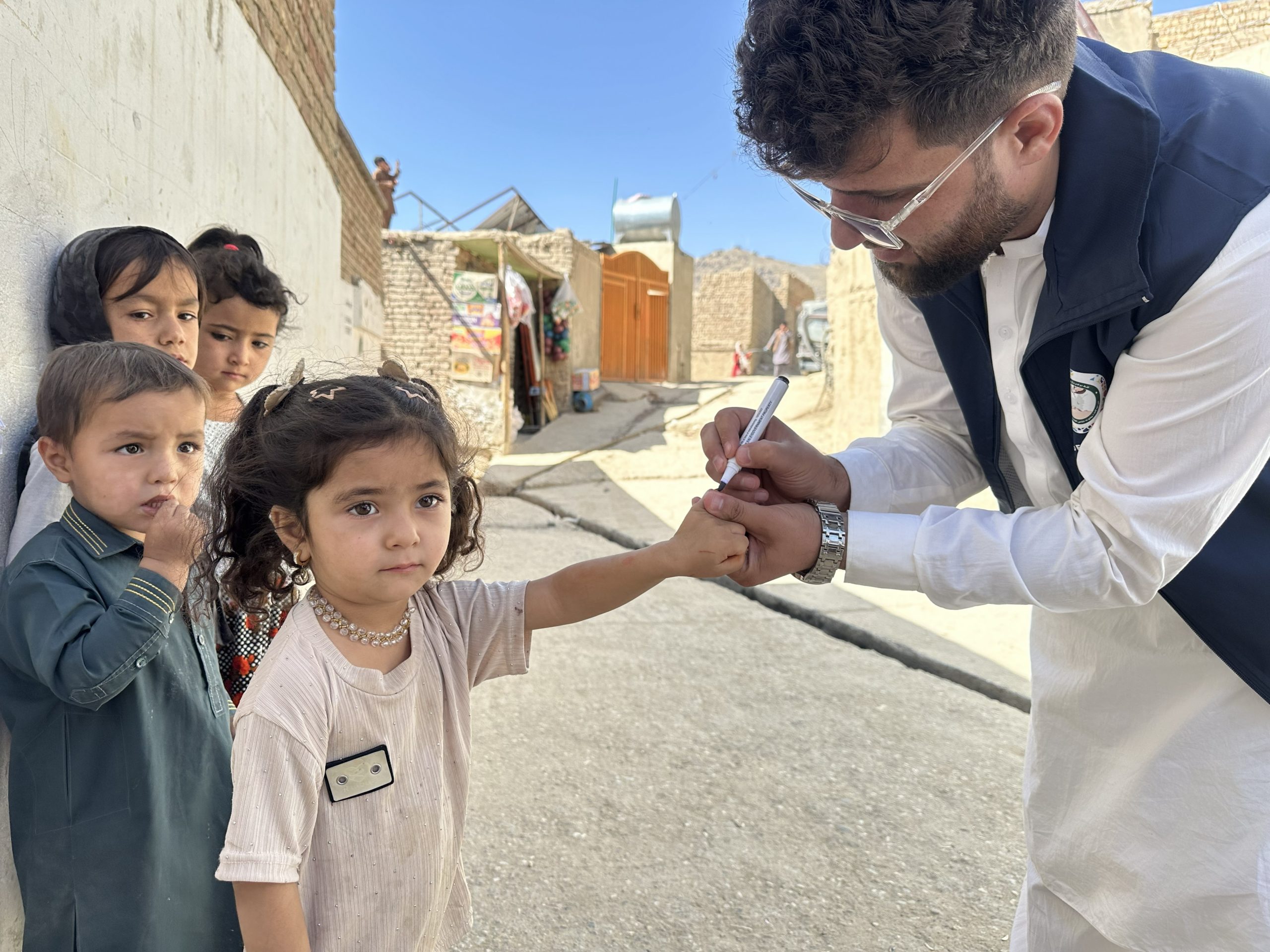
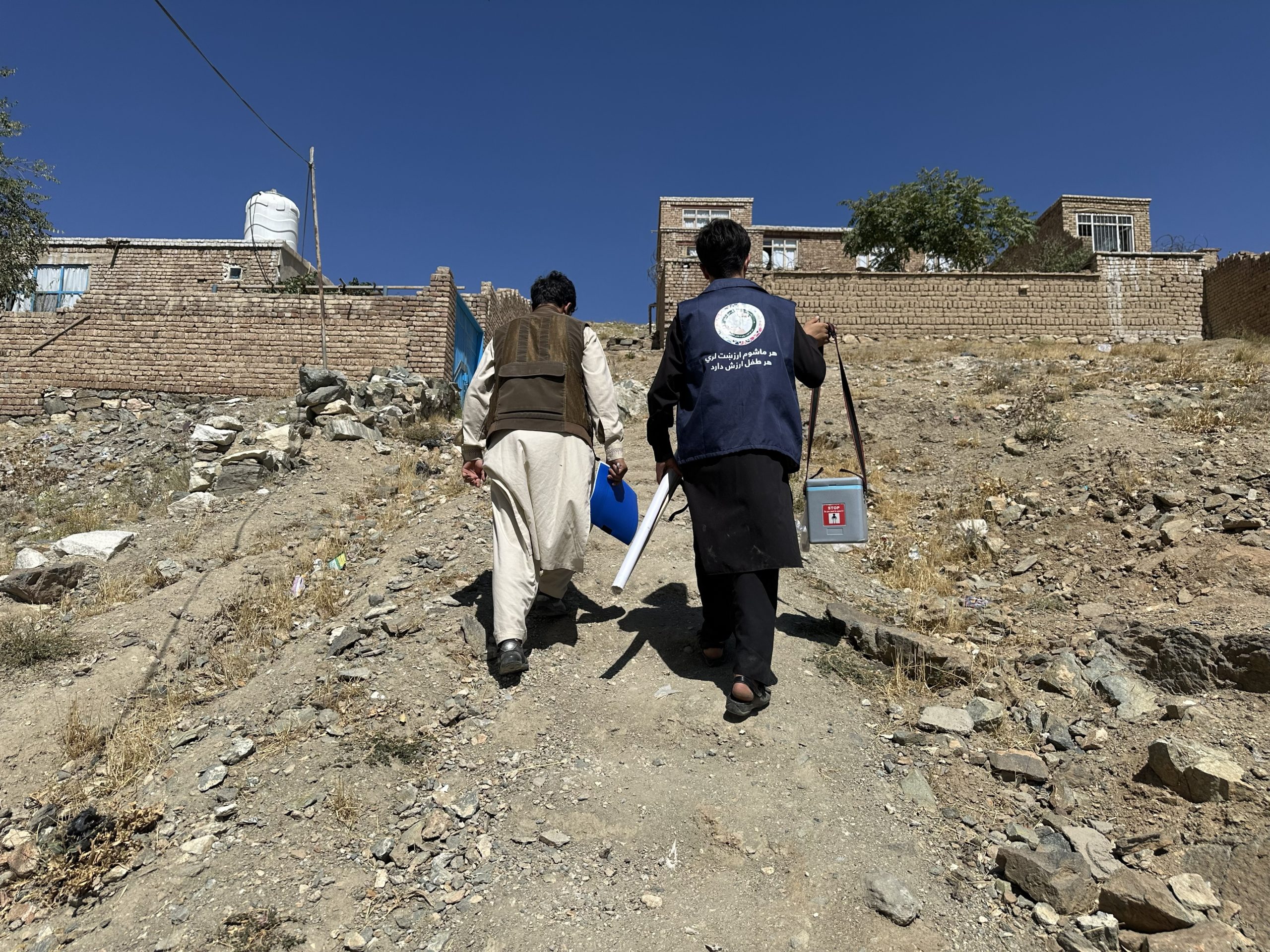
He checks his vaccine carrier, tally sheet and finger marker, familiar tools that have accompanied him throughout his 14 years as a polio vaccinator, and then sets out with a simple goal – to help ensure that every eligible child in his community in Kabul receives two drops of the oral polio vaccine during the site-to-site campaign.
For Rashed, a vaccination campaign is not just another working day.
“It is a special day for me,” he says. “I leave home enthusiastically because I know I am going to vaccinate children and protect the future generation of Afghanistan from poliovirus.”
Afghanistan is one of two countries in the world where wild poliovirus transmission has never been interrupted. Transmission continues, particularly in the country’s southern region where persistent challenges in reaching and vaccinating every child have allowed the virus to circulate.
Identifying and reaching children who have been repeatedly missed is a central priority for the polio eradication programme. For 14 years, Rashed has contributed to this effort, returning to the same communities, campaign after campaign.
Building trust, one family at a time
To someone watching from the outside, administering two drops of oral polio vaccine may seem simple. But for Rashed, the work begins long before the drops are given. And it starts with trust.
Over the years, families have come to recognize his face and name. They are familiar with his work. That familiarity is one of his greatest strengths.
He remembers one campaign when another vaccinator was assigned to his area. When families saw the new vaccinator, they asked where Rashed was.
“They were asking why I had not come to vaccinate their children,” he recalls. “It made me happy and proud. It showed me that I had gained the trust of the families.”
That trust is particularly important when families have questions or concerns about vaccination. Rather than seeing refusal as the end of a conversation, Rashed takes time to listen and address the parents’ concerns.
“When a family refuses, I talk with them,” he says. “I explain the polio vaccine, discuss its benefits and answer their questions.”
Over the years, those conversations have changed minds.
“I am happy that I have been able to convince several families who were refusing the polio vaccine,” he says. “Now they regularly vaccinate their children.”
These interactions also offer opportunities to discuss routine immunization and other health services, helping families understand how to protect their children’s health.
“Polio vaccination is not only about administering the vaccine. It is also a great opportunity to answer communities’ questions, not only about polio, but about other health issues.”
Reaching children still being missed
Despite the dedication of vaccinators like Rashed, some children in Afghanistan continue to miss essential polio vaccinations. To reach them, you must understand why children are being missed, address barriers to vaccination and ensure that families can access vaccination opportunities.
For Rashed, years spent working in the same communities have helped him understand families’ concerns and identify children who may have missed previous campaigns.
“Talking with parents helps me identify eligible children and track missed children,” he says. “It is also a good opportunity to raise awareness and answer their questions about polio and other vaccines.”
Identifying missed children and ensuring effective follow-up are essential to improving campaign quality and reaching more children with vaccination. The work is not always easy. Difficult weather, long distances and the physical demands of vaccination campaigns make reaching communities challenging.
“The hardest part of being a vaccinator is working in difficult weather conditions,” Rashed says.
But his determination has not changed. “I have a strong commitment to the programme and to preventing Afghan children from becoming paralysed. The weather does not stop me from going to communities and vaccinating children.”
Every child identified and reached represents another opportunity to close immunity gaps and prevent the virus from spreading.
Community trust
Over his years in the polio programme, Rashed has witnessed changes in how families understand vaccination.
“People’s views have changed since I joined the polio programme. Now people have more awareness about polio vaccine and are more interested in vaccinating their children.”
Community elders and religious leaders play an important role in encouraging families to vaccinate their children.
“I have witnessed how people in the community listen to them,” says Rashed. “Their views can help increase acceptance of polio vaccination.”
For Rashed, protecting children is a shared responsibility – one that requires vaccinators, families, community leaders and health workers to work together.
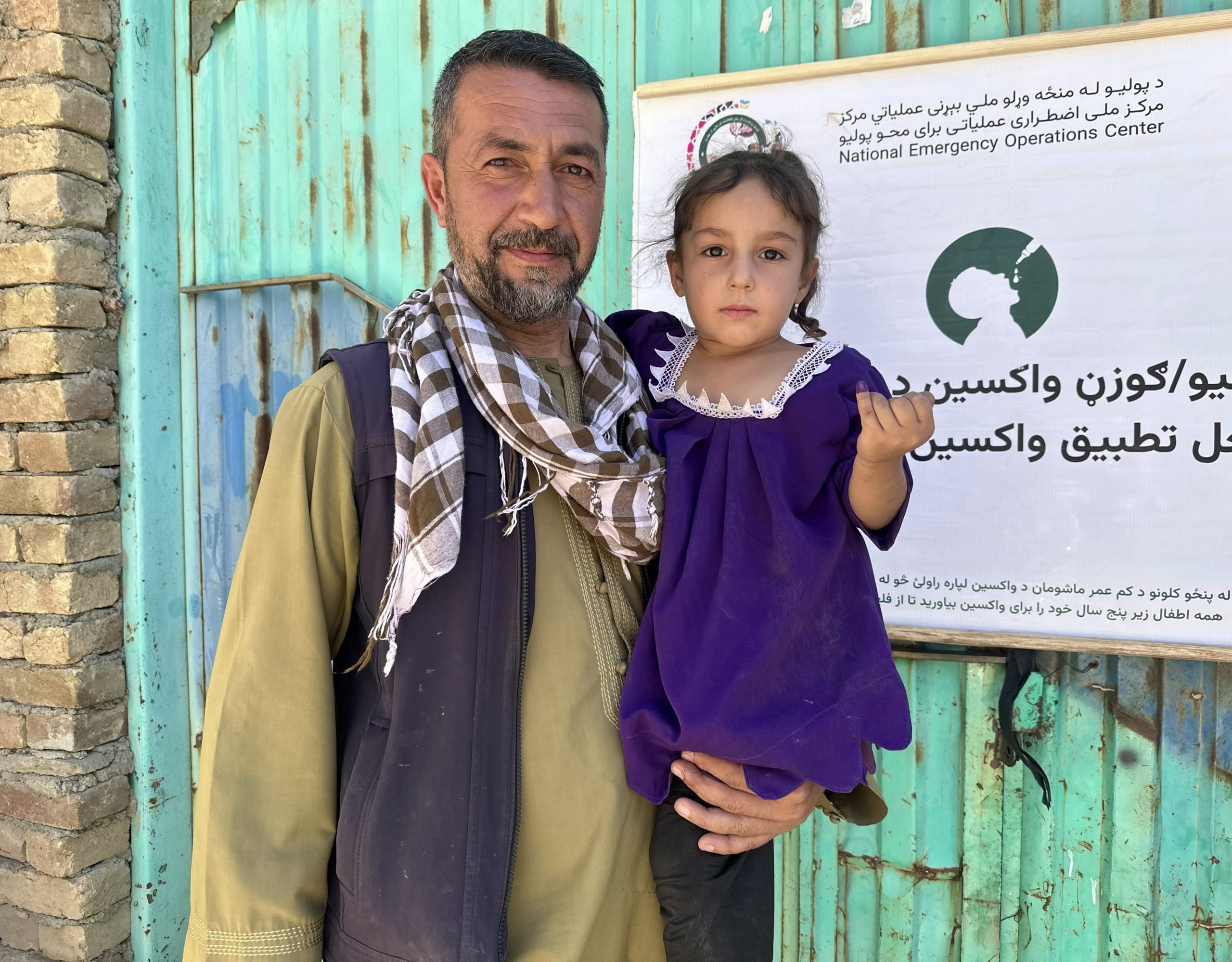
Mohammad Saber, who brings his children to a vaccination site and encourages other families to do the same, appreciates Rashed’s commitment.
“Rashed comes to vaccinate our children in every polio vaccination campaign, no matter whether it is hot or cold,” Mohammad says. “I bring my children to get the polio vaccine, and I ask every family to do the same.”
He believes Rashed’s work benefits the entire community. “His work protects my children and other children from becoming paralysed. It will contribute to making Afghanistan free of poliovirus.”
A dream of a polio-free Afghanistan
Administering two drops of oral polio vaccine to a child – for Rashed, the moment never loses its meaning.
“I really feel good when I vaccinate children against poliovirus,” he says. “I know about the benefits of the vaccine and that I am contributing to keeping them healthy.”
Each dose helps build a child’s protection against polio. Children need multiple doses to develop strong immunity, making both routine immunization and repeated vaccination campaigns essential to protect children and stop the spread of poliovirus.
His message to parents is simple. “The polio vaccine is safe. We need to protect our children from poliovirus. The best way to do that is vaccination. Two drops of polio vaccine can make a big difference to a child’s health and future.”
Fourteen years after he first became a vaccinator, Rashed remains committed to the goal that inspired him to begin this work.
“I want the polio vaccine to reach every child in Afghanistan. No child should be left behind, and no child should become paralysed because of poliovirus.”
“My job will be done when I see a polio-free Afghanistan alongside the countries that have eradicated polio.”
With poliovirus still circulating in Afghanistan, reaching every child remains an urgent priority. The dedication of frontline health workers like Rashed, together with the trust and support of communities, is essential to ensuring that children who have been missed are reached and protected.