Dear colleagues,
As 2025 draws to a close, I want to begin by first thanking the millions of health workers, vaccinators, surveillance officers, laboratory scientists, social mobilizers, and community volunteers who carried polio eradication forward during what was a difficult year. They did this often under the most difficult circumstances. I also wish to thank governments, donors, civil society organizations, and community leaders including women leaders, whose commitments sustained this effort at a time of profound global uncertainty. And thank you to parents and caregivers everywhere, who chose to protect their children and, in doing so, helped protect the world.
Above all, we are forever grateful to those who started the year with us and departed us too soon. May their souls forever rest in eternal peace.
This has been a demanding year. It has tested our resilience, our adaptability, and our resolve. Yet it has also reaffirmed something. Polio eradication remains one of the world’s most powerful expressions of collective action for equity, solidarity, and the protection of children.
A year that tested us and sharpened our focus
2025 was a year of hard realities. Persistent insecurity and access constraints in parts of Afghanistan and Pakistan limited reach to all children. Misinformation and fatigue challenged trust in some communities. Climate-related and other emergencies disrupted campaigns and routine services. And the global health financing environment tightened sharply, placing pressure on operational capacity across countries and partners.
These challenges demanded difficult choices. They reinforced the need for sharper prioritization, greater efficiency and uncompromising focus on what matters most to interrupt transmission.
In direct response to the realities of 2025, the Global Polio Eradication Initiative (GPEI) developed a focused 2026 Action Plan as an operational companion to the Polio Eradication Strategy 2022–2029. This Action Plan is grounded in realism and urgency. It protects non-negotiable functions while adapting to financial constraints and it prioritizes impact and execution.
The plan focuses on concentrating resources on the highest-risk geographies, including the remaining subnational areas with persistent wild poliovirus and circulating variant poliovirus transmission. It includes intensifying and refining vaccination strategies, expanding use of novel oral polio vaccine type 2 (nOPV2) and targeted use of inactivated polio vaccine (IPV) to close immunity gaps. It protects core surveillance and laboratory systems, which remain the backbone of the eradication effort. It purposefully moves the integration agenda forward. Integration also featured prominently in two dedicated engagements this year between the GPEI Polio Oversight Board and the Gavi Board, where both Boards emphasized the need for closer alignment of strategies and resources in subnational geographies facing chronic gaps in routine immunization and continued poliovirus transmission.
Positive epidemiological trajectory
Despite the difficulties faced, the overall trajectory continues to move in the right direction. In 2025, wild poliovirus type 1 transmission remained confined to its smallest geographic footprint in history in parts of Afghanistan and Pakistan. At the same time, circulating variant polioviruses continued to decline from their post-pandemic peak. Several outbreaks were successfully stopped this year, including in Indonesia, and Madagascar. In the face of tremendous challenges Gaza sustained its efforts and has now gone more than nine months without any new detections. Targeted response to detections in Papua New Guinea preventedfurther spread. With strong support from Ministers of the Lake Chad basin and the Horn of Africa, efforts to curb transmission in northern Nigeria and the Lake Chad basin intensified. Remarkable progress was seen in the Democratic Republic of Congo (DRC), where efforts to reverse the post-pandemic upsurge in cases are yielding results. Personnel deployed for polio outbreak response were on hand once again as the DRC successfully fought back against Ebola, highlighting once again how polio infrastructure successfully adapts to support broader health security goals.
These achievements demonstrate what is possible when government leadership, partner alignment, and community trust converge around a clear operational plan. But at the same time, continued detection of variant polioviruses in waste waters of several European countries, and isolation of wild poliovirus type 1 from a sewage sample in Hamburg, Germany, served as stark reminders that this virus respects no borders, is epidemic-prone and must be eradicated.
A defining milestone was also reached in 2025. More than two billion doses of nOPV2 have now been delivered globally. This innovation has fundamentally strengthened our ability to control and prevent variant poliovirus outbreaks and stands as a testament to what science, partnership, and disciplined execution can achieve together. Introduction of IPV-containing hexavalent vaccine and scale-up of fractional dose IPV are further examples of scientific innovations helping to advance the effort.
It is important for us to remember, even before eradication is achieved, the impact of this effort has been profound. Tens of millions of people are walking today, and millions are alive who might not have survived. Entire communities that were once beyond the reach of basic health services have been reached with vaccines, protection, and care. This legacy matters, and it must not be forgotten as we focus on finishing the job.
The people who make eradication possible
Behind every statistic is a human story.
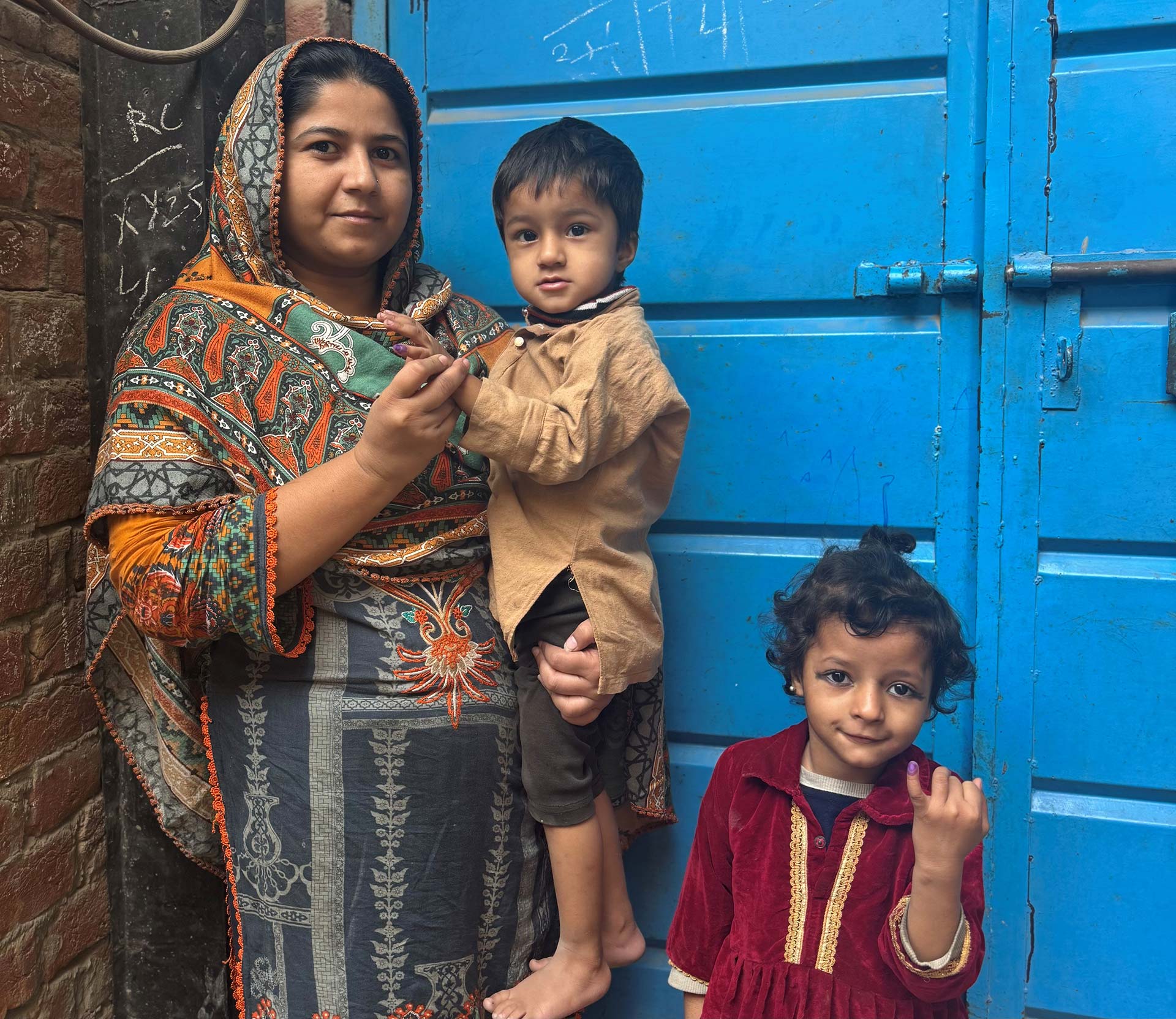
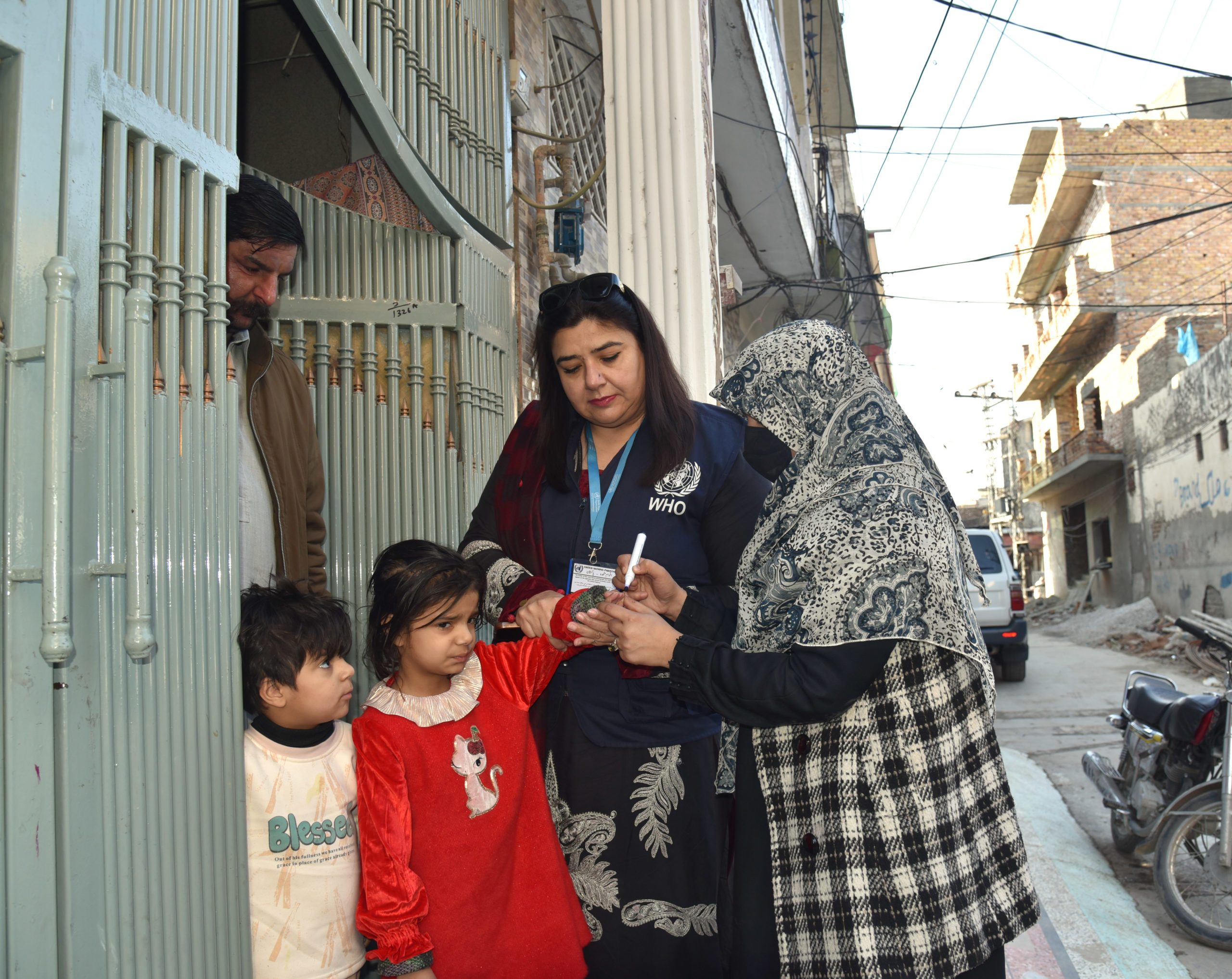
In 2025, frontline workers vaccinated hundreds of millions of children, often navigating insecurity, floods, extreme heat, and long distances. Women, who now make up the majority of the frontline workforce in many settings, continued to anchor delivery through trust, persistence, and leadership. In many fragile and crisis-affected settings, polio teams have remained a consistent public health presence, sustaining surveillance, supporting outbreak response, and helping protect communities when systems were under strain. Whenever we have succeeded, it is because people persist with professionalism, compassion, and integrity.
Partnership and solidarity in a changing world
The GPEI remains one of the largest and most complex partnerships in global health. In 2025, that partnership proved its strength.
Governments in endemic and outbreak-affected countries demonstrated leadership through sustained political oversight, cross-border coordination, and the integration of polio efforts with broader immunization and primary health care services. GPEI leadership, including WHO, UNICEF, Rotary International, CDC, Gavi, the Gates Foundation, the European Commissionand the King Salman Humanitarian Aid and Relief Centre, continued to bring their comparative strengths to bear. The Boards of both Gavi and the GPEI are working closely together to further advance the integration agenda.
A major moment of global solidarity came in December, when leaders gathered in Abu Dhabi and pledged US$1.9 billion to sustain polio eradication and protect children from preventable diseases. In a constrained financing environment, this commitment sent a clear signal: the world remains committed to finishing polio.
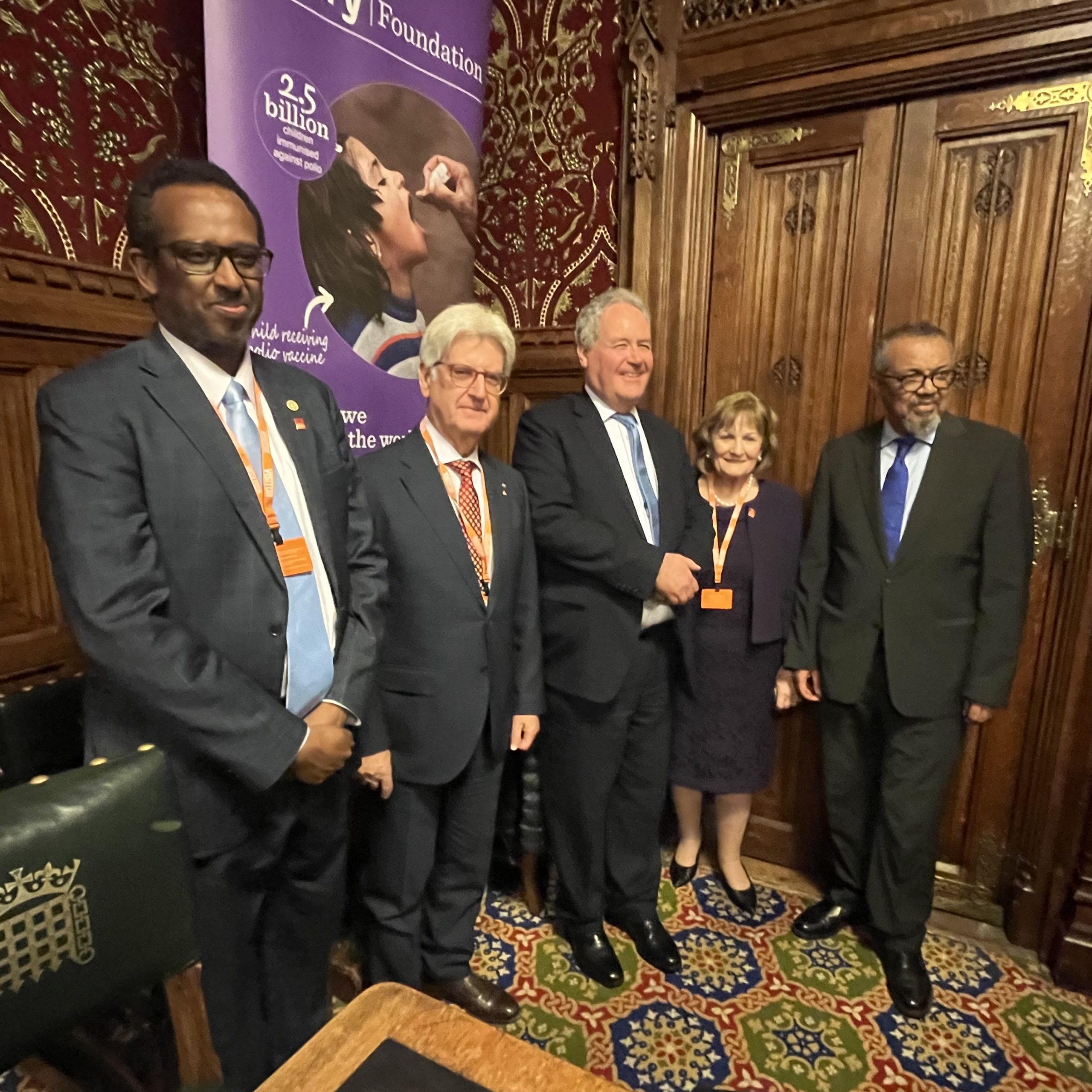
Rotary International continues to provide the moral compass of this effort, a role it has played for decades with unwavering dedication. At the same time, partners such as the Kingdom of Saudi Arabia and the United Arab Emirates have emerged as strong champions, choosing to do more at a time when global resources are under pressure. Their leadership reflects a shared belief that ending polio is both a moral obligation and a strategic investment in global health security.
I have had the privilege of seeing this effort at every level. I am in no doubt the GPEI partnership is resilient, adaptive, and capable of finishing the job.
Looking ahead to 2026
Polio eradication is a promise that geography, income, and circumstance will not determine who is protected from preventable disease. In 2025, the world showed that even in a fragmented global landscape, cooperation remains possible and progress remains within reach. As we enter 2026, let us take a moment to reflect on what was achieved in 2025 and return with a simple commitment. TO END POLIO FOR GOOD.
To every member of our staff and every partner around the world, you carried this work through uncertainty and personal sacrifice, with professionalism, compassion, and grace. The credibility of this programme rests on you.
Let us carry the discipline, unity, and resolve of this year into the next. Let us continue, together until polio is ended everywhere.
With deep gratitude and respect,
Jamal