By:
- Dr. Ondrej Mach, Team Lead of the Research and Product Development Team in the Polio Eradication Department at the World Health Organization
- Dr. Ananda Bandyopadhyay, Deputy Director of Technology, Research & Analytics, on the Polio Team at the Gates Foundation
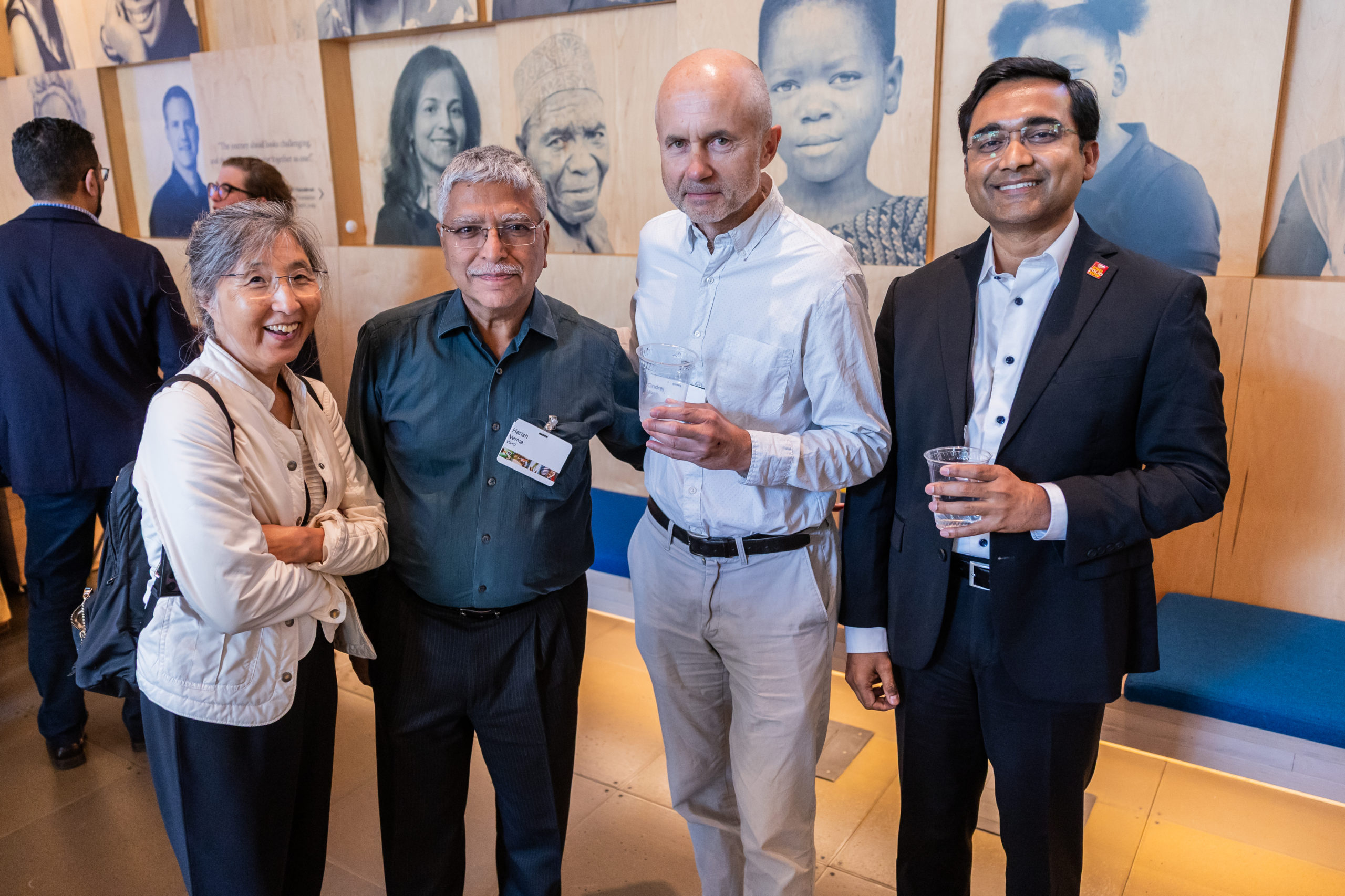
Background: These questions and answers reflect recommendations discussed by the Strategic Advisory Group of Experts on Immunization (SAGE) Polio Session (October 8, 2026) regarding the use of inactivated polio vaccine (IPV) in both routine immunization and outbreak response, in light of evolving polio epidemiology. Dr. Mach and Dr. Bandyopadhyay are the co-chairs of GPEI’s Polio Research and Analytics Group (PRAG). They led the process of synthesis and presentation of scientific evidence and epidemiologic context that informed the latest recommendations at the October 2026 SAGE meeting.
Q: What are the two main recommendations made by SAGE in their October 2026 meeting?
Ondrej:
“The recent recommendations from the Strategic Advisory Group of Experts on Immunization (SAGE) are that:
- Countries giving fewer than three IPV doses in routine immunization should transition without delay to a three-dose IPV-containing infant routine immunization schedule. The third dose of IPV in routine immunization should be delivered preferably through hexavalent vaccine introduction.
- If a poliovirus outbreak lasts beyond six months after a first fractional (fIPV) or full IPV dose in outbreak response, a second fractional or full dose IPV outbreak response can be considered to boost and help maintain mucosal immunity. SAGE requests a program evaluation in the short-medium term on the implementation of this recommendation to build on the evidence gap on the impact of two doses of IPV on mucosal immunity.”
Q: What does the evidence show about current immunity levels?
Ananda: “IPV is the only vaccine currently available that provides protection against all three serotypes of poliovirus, and the only routine source of protection against type 2 poliovirus. Type 2 poliovirus is the most prevalent form in circulation today for the variant poliovirus outbreaks and is a useful proxy for the other serotypes. Modelling estimates by researchers at Imperial College, and other collaborators indicate median type 2 immunity among children under five was about 60% in 2025, rising to only ~70% by 2031 even under the current two-dose IPV schedule — below the roughly 80% threshold generally needed to sustain protection against transmission.”
Q: Would a third IPV dose make a meaningful difference?
Ondrej: “Yes. Our estimates suggest switching to a three-dose (one each at 6-10-14 weeks-of-age) increases IPV-derived immunity by a median of 18 percentage points (up to 46 in some countries). Countries on a schedule that gives children doses at six, ten and 14-weeks of age see end-of-series immunity rise to ~99% (from ~78%). Countries on the 14-39 week schedule reach that same high protection about six months earlier. Coverage also tends to improve, since later doses often see more dropouts, and a third dose gives young children who didn’t seroconvert earlier another chance to build protection. Impact may vary by country, with the largest gains projected in high-risk settings such as Nigeria, DRC, Pakistan, and Chad.”
Q: Why is hexavalent vaccine the preferred way to add a third dose?
Ananda: “Hexavalent combines IPV for polio protection with other routine vaccines against deadly childhood diseases such as diphtheria, tetanus, pertussis, haemophilus influenzae type b and hepatitis b into a single injection, reducing visits, improving completion of the full series, and lowering delivery costs. About 40 Gavi-eligible countries are expected to switch to using hexavalent vaccines during the Gavi 6.0 period. Mauritania and Senegal have already started rolling out hexavalent vaccines. Since 2021, Gavi has funded two standalone IPV doses based on existing SAGE recommendations. Gavi now also supports hexavalent introductions under its co-financing policy, making hexavalent the most practical and the preferred path for introduction of a third dose of IPV and for complete protection against six childhood diseases in Gavi-supported countries. Gavi expects hexavalent prices to fall substantially by 2029, nearing price parity with pentavalent vaccines + IPV.”
Q: Is there enough supply, and would a third dose help children missed by routine immunization?
Ondrej: “Yes. Both Hexa and IPV supply are projected to be sufficient to accommodate for transitions and/or additional doses to be added to routine immunization schedules. Current IPV manufacturing capacity is estimated at 3–4 times annual demand, so the additional ~55 million doses/year (a rough estimate) projected across 40+ polio high-risk countries is not expected to strain supply, and more hexavalent manufacturers are expected to enter the market over the next two years with promising new formulations. Timing will be a critical factor to ensure there is enough manufacturer lead time for doses. A third routine dose of IPV, preferably through hexavalent introduction, as mentioned previously, would mainly benefit children the immunization programs already reached with early doses but then loses to dropouts. Our focus should also remain to improve our access to those children who we are failing to reach with any vaccines, through routine immunization or polio outbreak response.”
Q: What about endemic countries like Afghanistan and Pakistan?
Ananda: “These two countries are expected to benefit substantially from earlier, stronger protection with three doses of IPV administered in the first 3-4 months of life. Analysis of WPV1 cases since March 2022 found that approximately 90% of affected children had received zero IPV doses, and about half of them were under two-years-old. Such vast majority of children without any IPV doses despite the existing two dose recommendation is a stark reminder that we are failing to reach all the vulnerable children with any doses of IPV. As a result, increasing dose recommendations will not have an overnight impact in enhancing population immunity. Therefore, the priority should be to continue to improve ways to reach and vaccinate the kids who did not receive any IPV doses at all. The three-dose opportunity of IPV-protection through affordable Hexvalent vaccines should contribute to improving coverage with earlier-in-life dose opportunities. Finally, the same conditions sustaining WPV1 transmission in Pakistan and Afghanistan also drive high risk of large variant poliovirus outbreaks (500+ paralytic cases in 2020–2021), so stronger IPV immunity offers the promise of protection across all serotypes.”
Q: What is being proposed for outbreak response, and why?
Ananda: “Evidence shows full dose IPV and fractional IPV (fIPV) provide a mucosal boost in previously OPV-vaccinated individuals, stronger than an additional OPV dose. Per the new SAGE recommendations, if an outbreak persists beyond six months after an initial IPV dose in outbreak response, a second dose can be considered to reinforce immunity and improve the likelihood of interrupting virus transmission — a pragmatic threshold aligned with GPEI’s definition of outbreak “interruption,” not a precisely evidence-derived cutoff.”
Q: What are the key evidence gaps and tough questions here?
Ananda: “There is no direct evidence yet comparing impact of two IPV or two fIPV doses to one to assess impact on mucosal boosting. Also, most data on mucosal-boosting come from older, previously-vaccinated children (ages 1–12 years), with a smaller observed effect in the youngest age groups — so data on children under the age of five, who are central to many outbreak responses, remain a priority research gap. fIPV-specific data on kinetics of waning of mucosal immunity is also a research gap. Finally, adaptation of current recommendations and use of IPV in outbreak response has been low (under 3% of all campaigns, 2023–2026) probably due to cost, and operational hurdles, though updated 2026 outbreak response guidance now calls for using IPV alongside OPV whenever it won’t delay the response. We hope the program investigates ways to more widely use IPV in outbreak response based on the risk tiering prepared by the GPEI groups, and generates data on impact of such use.”
Q: Does any of this change bOPV use in routine immunization?
Ondrej: “No. bOPV in routine immunization continues as previously recommended. These changes concern strengthening the IPV component of the schedule specifically, including for countries already using fIPV.”
Q: What happens next?
Ondrej: “These recommendations were endorsed by the SAGE in October 2026 based on evidence presented by the SAGE polio Working Group and PRAG. Following the endorsement by SAGE as confirmed by the statement on 14 October, implementation would involve country-level planning. This includes planning for accelerated hexavalent transitions, Gavi’s process covering assessment, decision/forecasting, application, and rollout planning—with typical lead times of 12–18 months from decision to launch. The option to include an additional dose of IPV in outbreak response in areas with persistent poliovirus transmission should be more immediate, with countries and regions incorporating it in their standard operating procedures (SOPs) for outbreak response and implementing such campaigns where applicable.
Dr. Bandyopadhyay and Dr. Mach expressed gratitude to their colleagues Corey Peak, Kaija Hawes, Rocio Lopez Cavestany, Liz Krow-Lucal, Zunera Gilani and Feyrouz Kurji for their work contributing to the analysis discussed at the SAGE. They also thanked Professor Dr. Ziad Memish, chair of SAGE polio Working Group alongside other members of the Working Group, and collaborators from IVB, Gavi the Vaccine Alliance and other teams across the GPEI partnership for the inputs informing the recommendations.
Related Document: GPEI’s standard operating procedures for outbreak response.