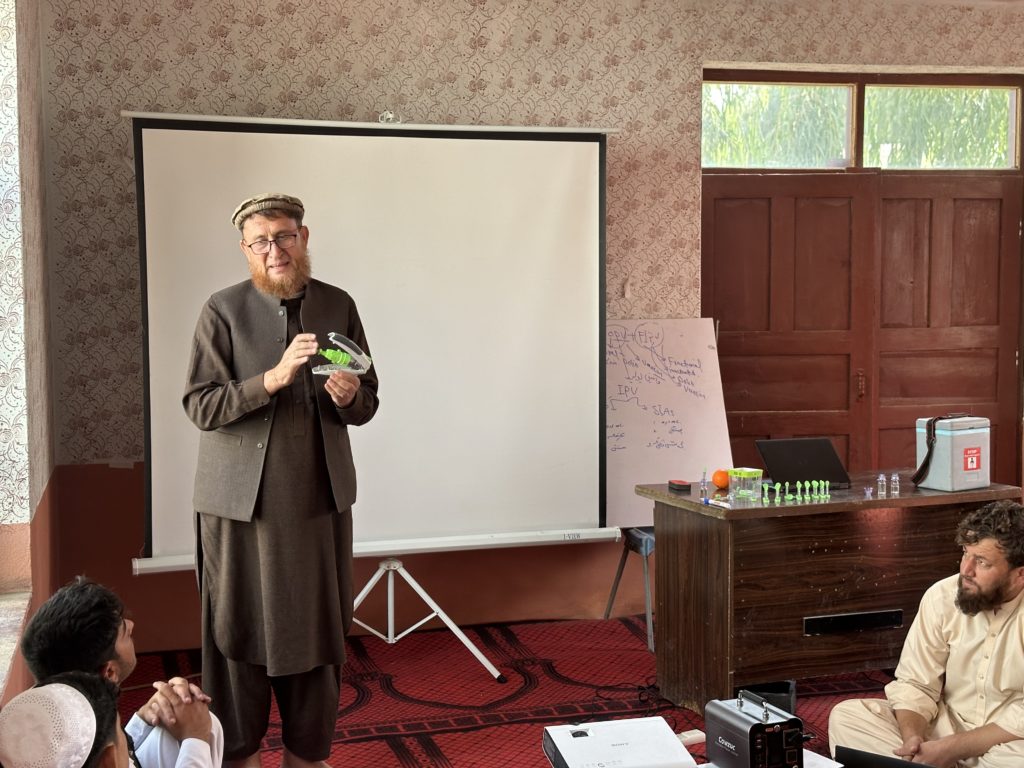
On a cloudy early morning in Afghanistan’s Laghman province, Dr Arsala set out for Alingar—a rugged, mountain-wrapped district he had visited many times before. After 12 years as a Provincial Polio Officer, he knew the rhythm of polio campaigns: the early starts, the long drives, the predictable challenges. But this time felt unusually different. This time, he carries a new tool being introduced for the first time in Afghanistan’s polio programme.
From August to October 2025, Afghanistan’s polio eradication programme launched a three-phase fractional Inactivated Polio Vaccine (fIPV) campaign across the eastern region, aiming to protect more than 1.2 million children aged 4–59 months from polio. Fifty districts, four provinces, and more than ten thousand dedicated polio workers joined forces—and uniting it all was a groundbreaking innovation never before used in the country’s polio eradication efforts.
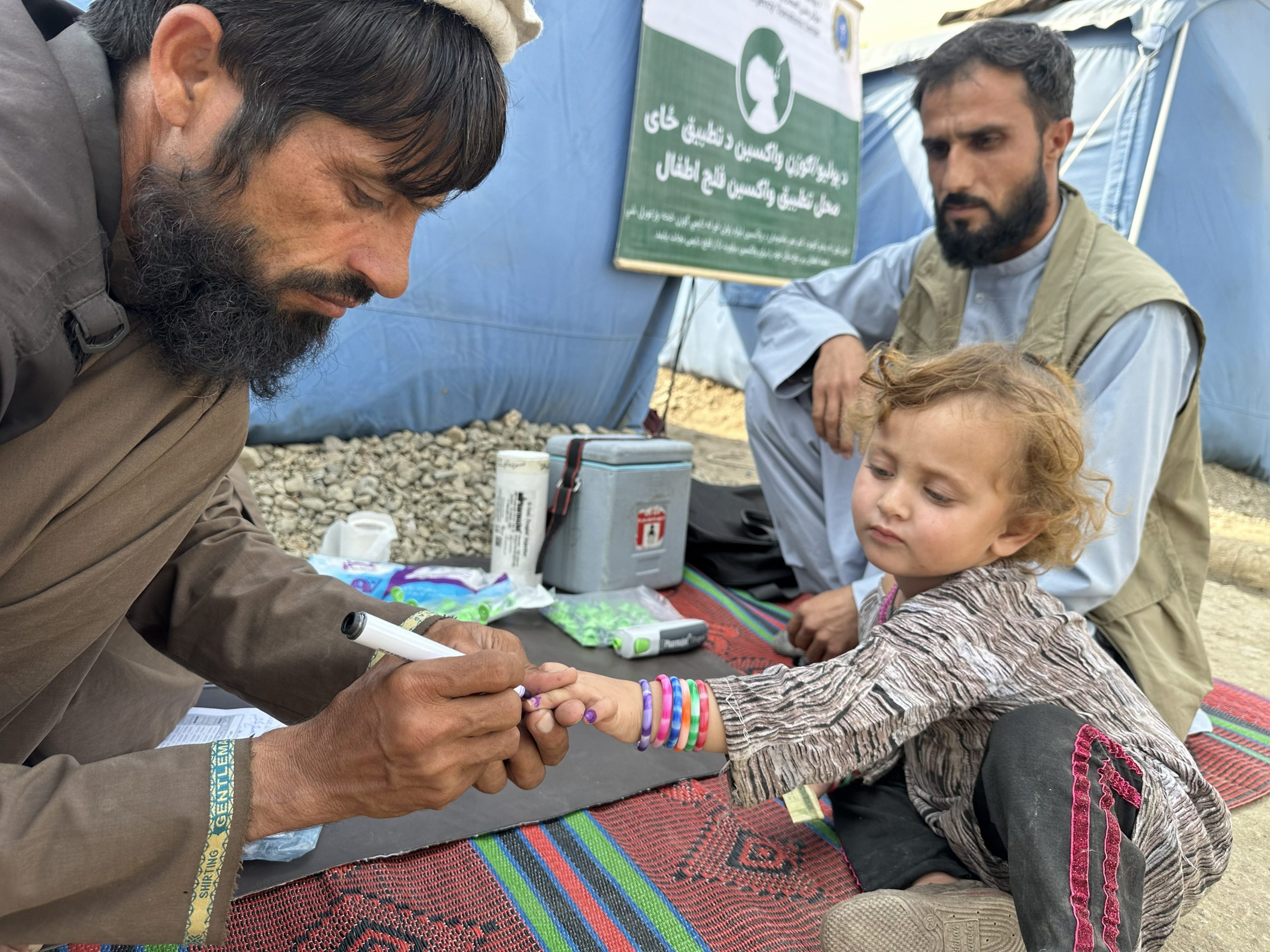
For the first time in Afghanistan, vaccinators introduced intradermal jet injectors—needle-free devices that deliver a tiny stream of vaccine through the skin in a split second. There was no needle, no fear, and no pain. Just a quick press, a soft click, and protection delivered with a smile.
It was modern technology meeting some of Afghanistan’s most remote communities.
“This campaign is unlike any I have ever seen before,” Dr Arsala said as he held the jet injector in his hand. For him, this was not only about new technology—it was about building trust. “This is the first time such a device is being used in polio campaigns in Afghanistan. Delivering high-quality training is crucial. Vaccinators must feel confident before they go to the field.”

In a mosque in Alingar, vaccinators gathered, leaning forward with curiosity as trainers like Dr Arsala and District Polio Officer Dr Jawaid demonstrated each step—loading the vaccine, positioning the injector, and administering the fractional IPV dose. For many frontline polio workers, it was their first time seeing such technology.
“This is the first time they are seeing this device,” Dr Jawaid said proudly. “We make sure they understand every part of it and feel ready to use it.”
A new kind of confidence
For Mohammad Ibrahim, a vaccinator with five years of experience, the device felt like a doorway to the future. “It is much easier than needle injections,” he said. “I’m excited. I’m confident to go into the field and vaccinate children.”
And in the field, something remarkable happened.
Communities welcomed the change

“When they learned the device is needle-free and painless, they were eager to see,” said vaccinator Zahir Islam. “Some parents who had avoided injectable vaccines before now brought their children with confidence.”
The campaign didn’t just bring a vaccine—it brought renewed trust.
A small device with big impact
IPV has been one of the world’s safest and most essential tools against poliovirus. With the jet injector, the experience became cleaner, quicker, and more acceptable—especially in communities where fear of needles had created real barriers.
Around the world, these devices have already been used to vaccinate millions of children. Now, Afghan children would benefit too. And in the hands of dedicated workers like Dr Arsala, Dr Jawaid, and thousands of vaccinators across the country’s eastern region, this small device carried something much larger: the promise of a future free from polio.
A step forward for Afghanistan

By the end of the third phase, vaccinators across the eastern region had fully mastered the new technology. With each campaign day, they moved from child to child with growing confidence—proud to be part of a campaign that could bring Afghanistan one step closer to ending polio for good.
For Dr Arsala, watching vaccinators use the jet injectors with ease, seeing communities welcome the technology, and witnessing children protected without fear became one of the most fulfilling moments of his long career.
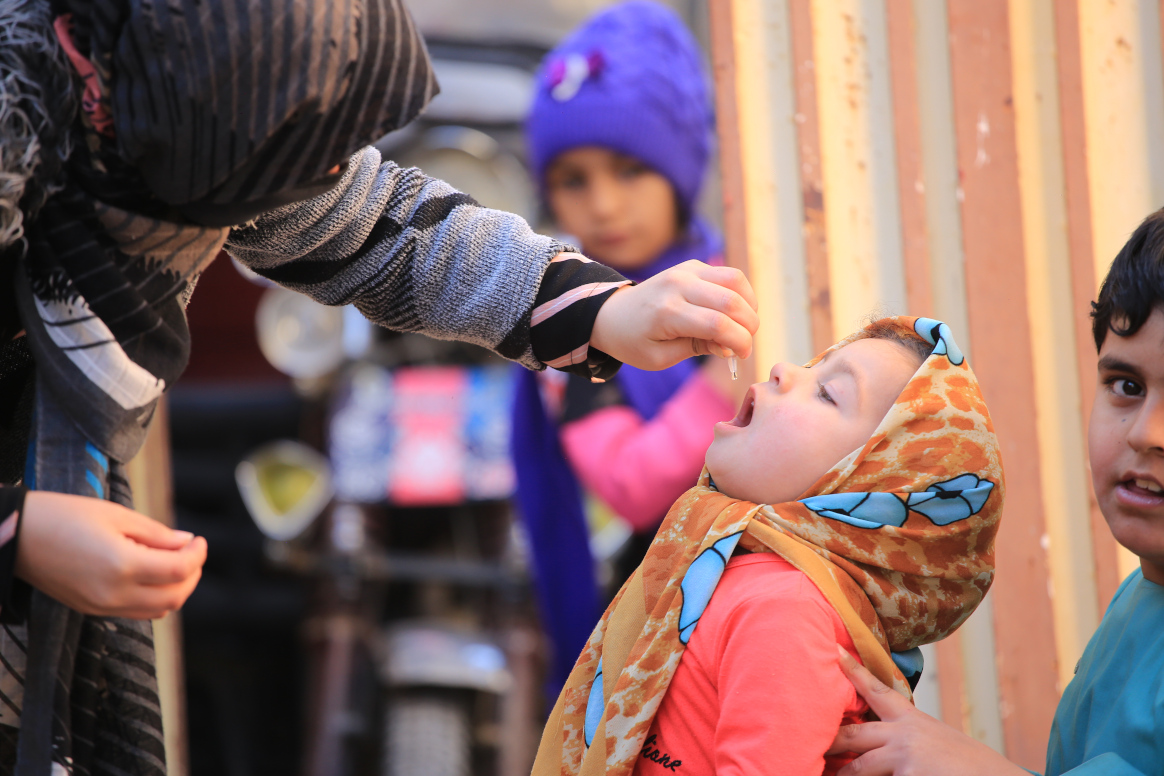
The impact of the campaign was clear. Children received both the fractional IPV dose and the oral vaccine—two tools working together to build stronger, longer-lasting protection while reinforcing routine immunization in one of Afghanistan’s highest-risk regions. It was a strategy rooted in global science and shaped by Afghanistan’s unique realities.
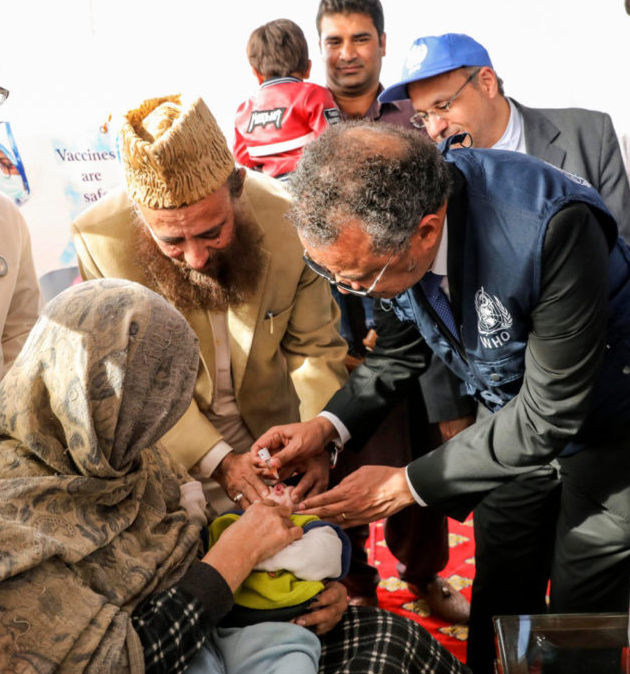
As the campaign closed, WHO Medical Officer for the East region, Dr Danish Ahmed, reflected on what it meant for the country’s future. “This campaign is not only about vaccination,” he said. “It is about giving children a safer, healthier future and bringing us closer to the dream of a polio-free Afghanistan.”
The eastern region—once a key area of poliovirus transmission in 2022–23—has since made remarkable progress. Conducting the fIPV campaign further strengthens children’s immunity and reduces the risk of poliovirus transmission in this region, fully aligning with Strategic Advisory Group of Experts on Immunization and Technical Advisory Group.